Weight loss jab users regain pounds rapidly after stopping treatment, major review confirms
01/08/2026 / By Cassie B.
- Stopping weight loss drugs leads to rapid weight regain.
- Heart health benefits reverse just as quickly after ending medication.
- Weight returns much faster after drugs than after lifestyle changes.
- Experts state these medications likely require lifelong use to be effective.
- This creates a permanent financial burden for individuals and health systems.
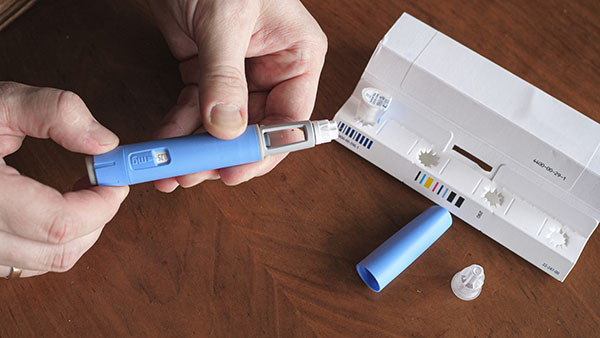
The brutal reality behind the blockbuster weight loss injection craze is coming into sharp focus. A major new scientific review has delivered a sobering verdict for millions who turned to drugs like Wegovy and Mounjaro for a solution: stop the shots, and the weight comes rushing back, bringing reversed heart health benefits with it. This pivotal research, examining more than 9,300 people, confirms these pharmaceutical interventions are not a cure but a lifelong crutch, raising urgent questions about the sustainability of a treatment model that demands perpetual payment to Big Pharma.
Conducted by researchers at the University of Oxford and published in The British Medical Journal, this first-of-its-kind analysis pooled data from 37 studies. It found that when patients discontinued their weight-loss medications, they regained weight rapidly, at an average rate of around one pound per month. The trajectory suggests most would return to their pre-treatment weight within 17 to 20 months. Sam West, a postdoctoral researcher at Oxford and co-author, stated, “What we found particularly shocking was just how fast weight was regained after people stopped taking medication.”
Heart benefits reversed
The fallout is not limited to the scale. The research warns that stopping the drugs reverses key cardiometabolic benefits, one of their major selling points. Improvements in blood sugar, blood pressure, and cholesterol returned to pre-treatment levels in less than 18 months. This rapid reversal turns a promised health intervention into a transient pause, with patients ultimately back at square one, or worse, once the weekly injections cease.
The contrast with traditional methods is striking. The review found that individuals who lost weight through diet and exercise programs alone regained their weight much more gradually, at just one-fifth of a pound per month. Crucially, the cardiometabolic benefits from these lifestyle changes persisted for up to five years after the formal program ended. In essence, weight returned almost four times faster after quitting medication than after ending a behavioral program.
A lifetime prescription?
The findings force a fundamental question about the nature of obesity treatment. Professor Susan Jebb, a study co-author and adviser to the NHS on obesity, said, “Obesity is a chronic relapsing condition, and I think one would expect that these treatments need to be continued for life, just in the same way as blood pressure medication,” she said. Professor John Wilding, from the University of Liverpool, echoed this, noting, “We don’t expect treatments for diabetes, high blood pressure or high cholesterol to continue working once medication is withdrawn – and there’s no scientific reason obesity should be different.”
This logic cements a paradigm of permanent pharmaceutical dependency. The drugs work by mimicking hormones that regulate hunger, but as Dr. Adam Collins, an associate professor of nutrition, explained, “As soon as the drug is stopped, appetite is no longer kept in check.” Without developing sustainable habits during treatment, patients are left defenseless against rebound hunger. Dr. Sonja Reichert, a physician who studies obesity, noted, “Many of my patients are surprised when I tell them that these medications are long term and this study just really reinforces that message.”
The implications are profound for healthcare systems and individuals. In the UK, the NHS currently offers Wegovy for a limited period of up to two years, a policy now under scrutiny. With an estimated 2.5 million people using these drugs in the UK alone, often at a private cost of £300 per month, the prospect of lifelong use presents a staggering financial burden. This model is a windfall for drugmakers but a potential bankruptcy for health services and a permanent line item on family budgets.
This scenario is a classic play from the Big Pharma handbook: create a customer for life. The drug manages the symptom but does not resolve the underlying causes rooted in diet, lifestyle, and environmental factors. Once you stop paying, the “solution” vanishes. Obesity is a complex interplay of factors that cannot be solved by a single-hormone fix.
The research underscores a forgotten truth that the pharmaceutical industry would rather you ignore: sustainable health cannot be injected. Real, lasting change requires the hard, free work of resetting metabolism through natural, multifaceted approaches that address the root causes. While the jabs offer a dramatic short-cut, the road ends with a lifetime of dependency and a bill that never stops coming. The path to genuine health isn’t found at the tip of a needle, but in the daily choices that reclaim the body’s own innate balance, proving once again that the most effective solutions are often the ones they can’t sell you.
Sources for this article include:
Submit a correction >>
Tagged Under:
Big Pharma, diabetes cure, discoveries, fight obesity, GLP-1, health science, Mounjaro, Ozempic, pharmaceutical fraud, Prescription drugs, real investigations, research, truth, Wegovy, weight gain, weight loss, weight loss jabs
This article may contain statements that reflect the opinion of the author
RECENT NEWS & ARTICLES