West Bengal’s Nipah outbreak tests the boundaries of the global biomedical police state and the pandemic propaganda machine
01/30/2026 / By Lance D Johnson
While international headlines scream about India “racing” to contain a “deadly” brain-attacking virus, a very different story is being told on the ground by those facing the pathogen directly. A recent Nipah virus outbreak at a private hospital in West Bengal, India, has triggered a familiar wave of global media panic and theatrical airport screenings, yet local health experts are pushing back against the fear narrative. This discrepancy exposes a critical rift: the relentless drive of the biomedical security state to cultivate perpetual crisis versus the reality of a known, containable zoonotic disease. The orchestrated alarm over Nipah is a test case, probing whether populations will once again surrender to fear-based protocols or scrutinize the motives behind the sensationalism.
Key points:
- A Nipah virus outbreak in West Bengal, India, is being contained locally, with a reproductive number (R0) of 0.4 indicating low transmissibility.
- Despite containment, international media and some governments are amplifying the threat, implementing airport screenings and using alarmist language.
- An Indian doctor publicly criticizes the panic, warning against social media fearmongering and unjustified comparisons to COVID-19.
- The Nipah virus, while having a high fatality rate, requires direct contact for transmission and has a history of being successfully contained in India.
- The response reveals a pattern of leveraging rare pathogens to justify expanded biosecurity measures and condition public acceptance of emergency protocols.
Another zoonotic virus contained
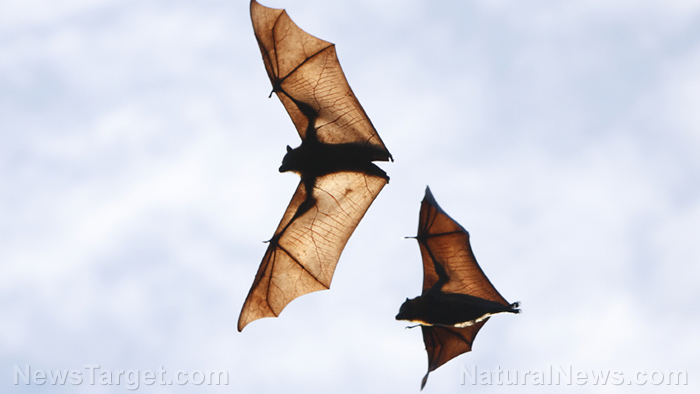
Let’s be clear about what Nipah is. This isn’t some novel, airborne phantom engineered in a lab. It’s a known zoonotic virus, spilling over from fruit bats, that has circulated for decades. Its fatality rate is indeed severe, but its mode of transmission is its limiting factor. Unlike the politically-convenient COVID narrative, Nipah doesn’t travel easily through the air in a crowded room. It requires direct contact with the bodily fluids of an infected person or consumption of contaminated food, like raw date palm sap. This fundamental fact makes it a poor candidate for a global pandemic advertising campaign, but a perfect candidate for targeted, local public health measures—the kind that snuff out the knee jerk totalitarian reaction for global lockdowns or digital health passports.
This is why the reaction from international bodies and their media partners is so telling. Watch the language: “racing to contain,” “experts scrambling,” “deadly outbreak.” These are not neutral descriptors; they are emotional triggers designed to activate your pandemic trauma. They aim to bypass your rational mind and send you back to the fear state of 2020, where every news alert demanded you relinquish more freedom for the illusion of safety. When Thailand screens over 1,700 passengers from Kolkata despite zero cases found, it’s not science—it’s political theater. It’s a performance of “biosecurity” meant to normalize the infrastructure of medical surveillance, making you comfortable with the idea that your movement across borders is contingent on your health status.
The voice of reason comes from Dr. Rajeev Jayadevan, a former Indian Medical Association aide, who directly confronted the panic. “The situation in West Bengal has been contained,” he stated plainly. He broke down the science, explaining the low reproductive number means the outbreak naturally dies out. His most crucial warning was against the manufactured panic: “There is no need for mass panic, in terms of say, like the new Covid… There is nothing like that.” He pointed to the real engine of fear: social media and media outlets where “people with limited understanding often speak in alarmist terms.” He is describing the very playbook used to manipulate you.
A history of control, not catastrophe
Look at the record. Kerala, India, has faced nine separate Nipah outbreaks since 2018. Every single one was contained. West Bengal itself faced a major outbreak 20 years ago. It was contained. This is the consistent history: local health workers, using classic infection control methods, stop Nipah. It does not require a global WHO directive, an EU digital certificate, or a new mRNA platform. The virus’s own biology confines it. So why the sudden global interest? Because the pandemic-industrial complex is hungry. It feasts on fear. After the COVID bonanza for pharmaceutical and tech giants, the machine is idling, waiting for the next “crisis” to justify its existence and expansion. A high-fatality virus with a scary name is a potent ingredient, even if its transmission potential doesn’t match the hype.
They want you to see a virus and immediately think “lockdown,” “mandate,” and “booster.” They are conditioning you. Each “outbreak” headline, each unnecessary airport screening, is a rehearsal. It’s a drill for your compliance. The goal is to make the emergency framework the permanent framework, where any pathogen can be used as a pretext to monitor, restrict, and medicate the populace. The powerful are not afraid of Nipah; they are enamored with its utility as a tool for control.
Your mind is the final battleground. Will you accept the screaming headlines crafted in London newsrooms, or will you listen to the doctors on the front lines in West Bengal who are actually managing the situation? The truth is not in the panic, but in the pattern. The pattern shows a virus that is containable. The pattern shows media outlets inflating risks. The pattern shows governments eager to roll out the biosecurity carpet at the slightest provocation.
Sources include:
Submit a correction >>
Tagged Under:
autonomy, biosecurity, containment, covid-19, deception, Dr. Rajeev Jayadevan, emergency protocols, fatality rate, fearmongering, freedom, India, lies, media panic, medical surveillance, Nipah virus, outbreak, pandemic, propaganda, Public Health, transmission, truth, West Bengal, zoonotic disease
This article may contain statements that reflect the opinion of the author
RECENT NEWS & ARTICLES