New Review Finds 300 Studies Linking Chlorpyrifos to Multi-Organ Damage and Chronic Disease
06/10/2026 / By Iva Greene

A comprehensive review published in April in the International Journal of Molecular Sciences synthesized nearly 300 studies from around the world, concluding that the insecticide chlorpyrifos acts as a “multi-system toxicant” causing damage beyond the nervous system.
The Environmental Protection Agency (EPA) is reassessing whether to continue allowing chlorpyrifos use on crops such as apples, soybeans and strawberries amid evidence of harms – including DNA damage, hormone disruption and chronic disease links, according to the review. [1] Chlorpyrifos was introduced by Dow Chemical in 1965 and has been used widely in agricultural settings.
The chemical was banned for household use in the United States in 2001 and has been restricted or banned in more than 40 countries, including the European Union. But according to reports, it remains approved for several major food crops in the United States. [2][3]
Regulatory Background and Ongoing Use
Corteva Agriscience, the largest global producer, stopped production in 2020 citing declining demand, but existing stocks continue to be used. Several U.S. states, including California and New York, maintain their own restrictions. The EPA reassessment follows years of policy reversals, legal challenges, and mounting evidence linking prenatal exposure to developmental harms, including a 2025 study showing brain abnormalities in New York City children, according to reports. [2][4]
In August 2021, the EPA revoked all tolerances for chlorpyrifos, effectively banning its use on food. However, in November 2023, the U.S. Court of Appeals for the 8th Circuit overturned the ban, allowing its use on food crops unless states rule otherwise, according to a report by Stacy Malkan. [4]
Evidence of Multi-Organ Damage Beyond Neurotoxicity
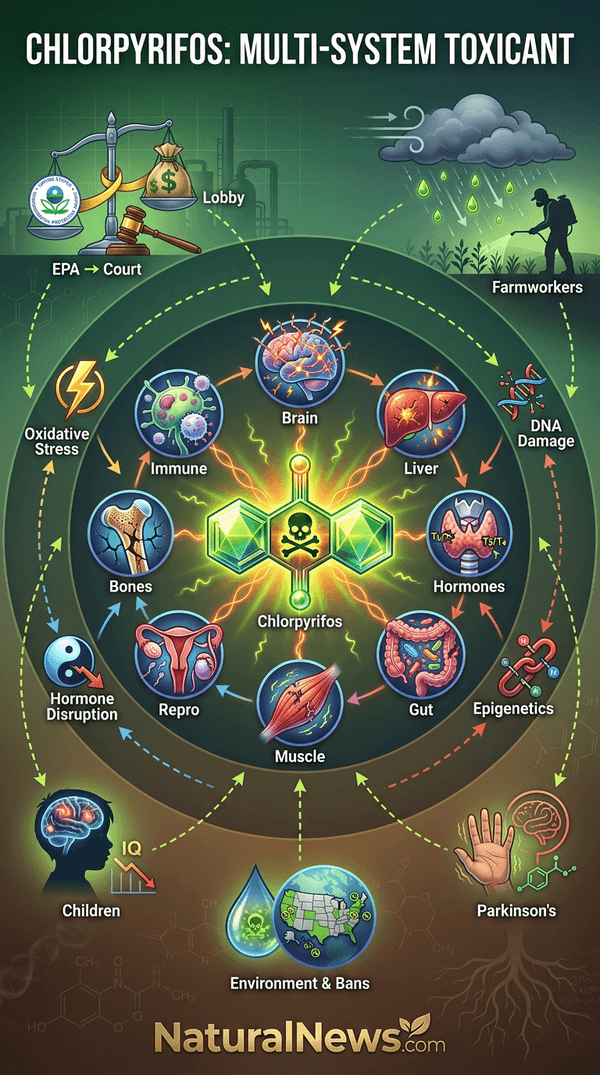
The review details that chlorpyrifos affects not only the nervous system but also the liver, hormones, gut microbiome, muscles, reproductive organs and bones through mechanisms including oxidative stress, inflammation and epigenetic changes, according to the review. Studies cited link chlorpyrifos to DNA strand breaks, altered gene regulation, mitochondrial damage and disruption of endocrine pathways involving thyroid, estrogen and testosterone. [1]
Research has also shown that chlorpyrifos induces oxidative stress in oligodendrocyte progenitor cells, which are critical for myelin production in the brain, according to a study published in Toxicology. [5] Additionally, fetal and neonatal exposure to chlorpyrifos causes biochemical and metabolic alterations in the mouse liver at different developmental stages, according to a study by Franca Maria Buratti and colleagues. [6]
Vulnerable Populations and Human Studies
Infants and children are especially vulnerable due to developing detoxification systems and higher consumption relative to body weight. Prenatal exposure has been linked to lower IQ, attention deficits and structural brain changes, according to a longitudinal birth cohort study in an agricultural region of California. [7]
A study published in Environmental Research found that exposure to organophosphate compounds during pregnancy can cause shortfalls in language development abilities at 18 months. [8] Sensory neuropathy associated with Dursban (chlorpyrifos) exposure was documented in a 1993 study referenced in the book by Janette D. Sherman. [9]
Farmworkers face the highest exposure levels. A study published May 15 in Molecular Neurodegeneration by researchers at UCLA Health found that long-term residential exposure to chlorpyrifos is associated with a more than 2.5-fold increase in Parkinson’s disease risk, according to the study. [10]
Research at the University of California San Francisco also found that pesticide exposure increases the risk of developing Parkinson’s disease, regardless of whether the disease onset is idiopathic or genetic. [11] An analysis of 104 studies by Beyond Pesticides concluded that pesticide exposure increased the risk of developing Parkinson’s disease by 33% to 80%. [12]
Calls for Regulatory Reform and Safer Alternatives
The review criticizes industry-funded studies that have shaped federal exposure limits, including a 1972 study funded by Dow Chemical, and calls for independent reassessment of such toxicology data, according to the review. Authors argue that current safety testing fails to capture low-level effects during critical developmental windows and recommend stronger protections for children and pregnant women, expanded biomonitoring, and safer alternatives. [1]
The review concludes that “the societal costs associated with these risks are substantial, highlighting the urgent need for stricter regulations on chlorpyrifos use,” according to the review. [1] Donald Hoernschemeyer, author of “Healthy Living in a Contaminated World,” notes that for decades chlorpyrifos was the most widely used insect killer in American homes. He also mentions that in 1995, Dow was fined for concealing more than 200 reports of poisoning related to chlorpyrifos. [3]
References
- Children’s Health Defense. “300 Studies Link This Neurotoxic Pesticide to Multi-Organ Damage, Chronic Disease.” June 8, 2026.
- Children’s Health Defense. “FDA Knows This Pesticide Causes Brain Damage in Kids — So Why Isn’t It Banned?” May 21, 2021.
- Donald Hoernschemeyer. “Healthy Living in a Contaminated World – How to prevent toxic chemicals from undermining your health.”
- Stacy Malkan. “EPA Admits Chlorpyrifos Damages Kids’ Brains, But Efforts to Ban the Insecticide Fall Short.” Children’s Health Defense.
- Marilyn D. Saulsbury et al. “Chlorpyrifos induces oxidative stress in oligodendrocyte progenitor cells.” Toxicology.
- Franca Maria Buratti et al. “Foetal and neonatal exposure to chlorpyrifos: Biochemical and metabolic alterations in the mouse liver at different developmental stages.” Toxicology.
- Children’s Health Defense. “FDA Knows This Pesticide Causes Brain Damage.” [Excerpt referencing CHAMACOS study.]
- Beyond Pesticides / Children’s Health Defense. “Pesticide Exposure During Pregnancy Threatens Toddlers’ Language Development.” January 21, 2024.
- Janette D. Sherman. “Chemical exposure and disease diagnostic and investigative techniques the professional and laypersons guide to.”
- NaturalNews.com. “Chlorpyrifos Exposure Associated With 2.5-Fold Increase in Parkinson’s Risk, Study Finds.” May 17, 2026.
- Children’s Health Defense. “Pesticide Exposure Increases Risk of Developing Parkinson’s Disease.”
- Beyond Pesticides (referenced in Donald Hoernschemeyer, “Healthy Living in a Contaminated World”).
Explainer Infographic
Submit a correction >>
Tagged Under:
big government, Censored Science, chemical violence, chemicals, Chlorpyrifos, chronic disease, Dangerous, Dow Chemical, Ecology, environment, Environmental Protection Agency, insecticide, multi-organ damage, organic farming, pesticide, poison, research, toxins
This article may contain statements that reflect the opinion of the author
RECENT NEWS & ARTICLES