Scientists sound alarm over DNA risks in AI-designed “universal” coronavirus vaccine
06/18/2026 / By Cassie B.
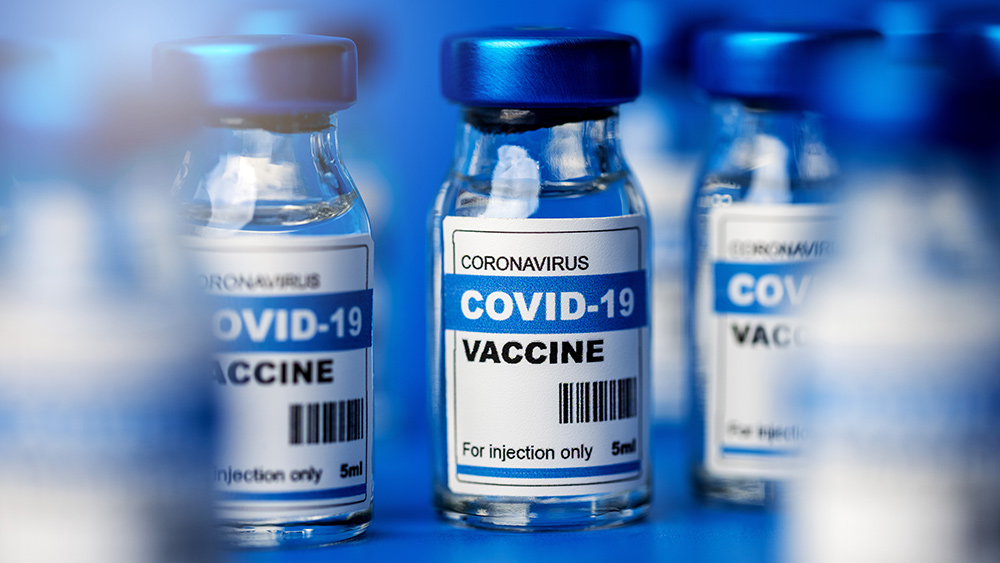
- New DNA-based coronavirus vaccine developed by Cambridge and DIOSynVax uses AI to target broad coronavirus strains but faces criticism over unproven safety and regulatory transparency.
- First human trial reported 121 adverse events among 39 participants, with 23 linked to the vaccine, raising concerns about its risk profile.
- Critics warn of DNA contamination risks, citing past discoveries of harmful plasmid contaminants in existing vaccines and undisclosed sequences in the new trial.
- Regulators are accused of failing to ensure safety, with the Sarbeco vaccine’s plasmid sequence remaining undisclosed and no pre-trial genotoxicity studies conducted.
- Gates Foundation and CEPI funding the project amid accelerated timelines and experimental delivery methods, including needle-free jet injection, spark ethical alarms.
A new coronavirus vaccine developed by artificial intelligence is sparking both excitement and alarm. The University of Cambridge and its Bill Gates-linked biotech spinoff DIOSynVax recently completed the first human trial of the Sarbeco vaccine, claiming it protects against a broad range of coronaviruses, including future pandemic threats. Critics warn the DNA-based platform carries serious unproven risks and that regulators cannot be trusted to catch them.
Cambridge claims breakthrough, critics demand scrutiny
The trial enrolled 39 healthy volunteers ages 18–50 across England and tested a vaccine built around an AI-designed “super-antigen” intended to trigger immunity against the entire Sarbeco coronavirus family, which includes SARS, SARS-CoV-2 and related bat viruses. Results published in the Journal of Infection reported no serious adverse reactions, but 121 unsolicited adverse events were recorded, with 23 deemed vaccine-related. This amounts to nearly four per participant.
Christof Plothe, D.O., of the World Council for Health steering committee, said the announcement “demands scrutiny, not celebration.” He drew a direct parallel to the COVID-19 rollout. “The original mRNA COVID vaccines were sold with identical rhetoric — safe, effective, groundbreaking — yet they failed on their central promises. They never stopped transmission,” he said.
DNA delivery raises contamination concerns
The Sarbeco vaccine is administered via a needle-free “micro fluid jet” that sprays plasmid DNA through the skin. Karl Jablonowski, Ph.D., senior research scientist for Children’s Health Defense, questioned the cellular-level implications. “What happens to cellular function when one cell gets too many plasmids?” he asked. He also doubted Big Pharma’s commitment to a truly universal product. “The end-all-be-all vaccine, if it works as advertised, would end a very lucrative revenue stream for Pharma,” he said. “A new revenue stream may be found from the constant stream of boosters.”
The contamination concern is not theoretical. In 2023, researchers found COVID-19 vaccines contained plasmid DNA contaminants, including simian virus 40 (SV40), a cancer promoter never disclosed to regulators. A 2024 peer-reviewed study found DNA plasmid levels in Pfizer’s COVID-19 shot ranging from 360 to 534 times higher than the globally accepted 10 nanogram per dose limit. A CHD-funded study published this year detected residual DNA in Pfizer and Moderna shots in forms standard testing doesn’t typically catch.
Regulators called out for failing the public
Kevin McKernan, chief scientific officer of Medicinal Genomics, said the regulatory track record makes the new vaccine deeply concerning. “We cannot trust the FDA to review this for safety as they showed quite clearly they are incapable of doing such with COVID-19 vaccines,” he said.
“When undisclosed sequences are discovered, regulators act to cover up the problem as opposed to addressing it.” McKernan noted the Sarbeco vaccine’s plasmid sequence has not been publicly disclosed, adding: “I would not inject/tattoo anything where the plasmid sequence is not known and scrutinized by the public.”
Plothe said the trial’s brevity makes any safety claim premature. “Phase I/II trials enrolling dozens to perhaps 100 participants over months cannot detect autoimmune conditions developing over years, oncogenic signals requiring 5–15 years to manifest, or reproductive effects,” he said. “Claiming safety from such limited data for a novel AI-designed antigen delivered via a platform with known DNA contamination is scientifically dishonest.”
Gates funding and accelerated timelines raise red flags
The Gates Foundation is listed as a funder of DIOSynVax, although the level of investment has not been disclosed. In 2022, the Coalition for Epidemic Preparedness Innovations (CEPI) — co-founded by the Gates Foundation and the World Economic Forum — announced $42 million for the project. CEPI’s “100 Days Mission” aims to compress future vaccine development to just 100 days from pathogen identification.
Dr. Peter McCullough, who reviewed the trial publicly, flagged a concern few outlets have raised: the needle-free delivery device shoots liquid into the skin at high pressure, raising the possibility of non-consensual vaccination. “If I snuck up behind you and just brushed by you, I could pop that, and then you’re vaccinated with DNA plasmids,” he warned. He also noted that no genotoxicity, teratogenicity or oncogenicity studies were conducted before the trial began, even as the study itself acknowledges human cells possess mechanisms for incorporating foreign DNA into the genome.
Jablonowski, commenting separately on CEPI-funded rapid vaccine development, offered a fitting summary: “If history is our teacher, this rapid deployment of experimental fast-tracked vaccines will not be accompanied by commensurate pharmacovigilance. They will be untracked and unaccountable shots in the dark.”
Sources for this article include:
Submit a correction >>
Tagged Under:
AI vaccines, Big Pharma, bill gates, COVID-19 vaccine, Glitch, immune system, risk, universal vaccines, Vaccine dangers, vaccine wars, vaccines
This article may contain statements that reflect the opinion of the author
RECENT NEWS & ARTICLES