Study: Loneliness Linked to Heart Valve Disease, Cardiologists Urged to Assess Social Health
06/25/2026 / By Morgan S. Verity

A study published in the Journal of the American Heart Association has identified loneliness as a significant risk factor for degenerative heart valve disease, a finding that researchers say cardiologists rarely examine.
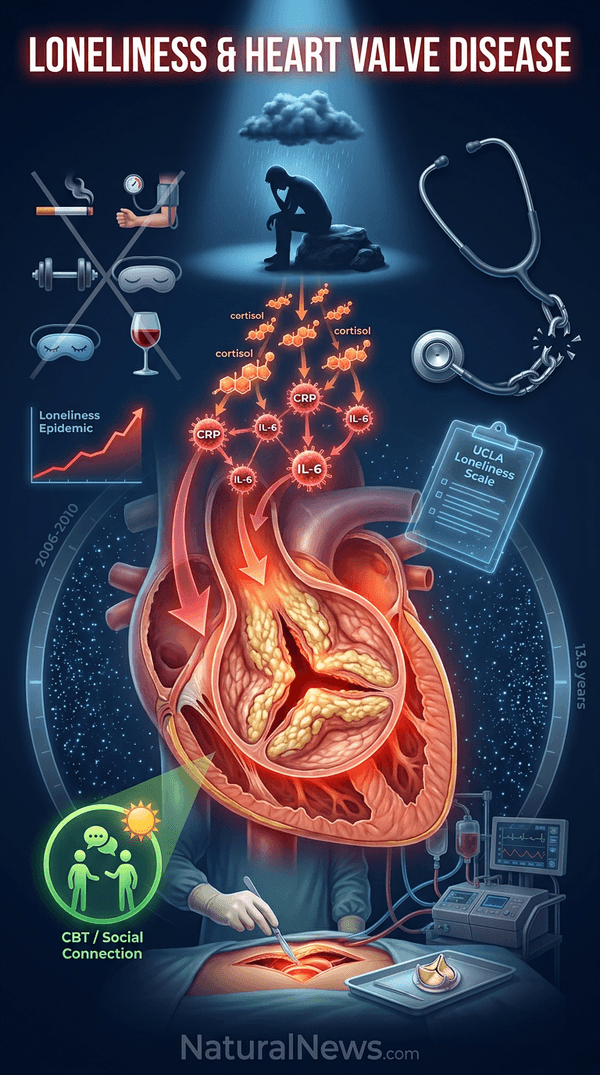
According to the study, adults reporting high levels of loneliness faced a 19% higher overall risk of developing degenerative valvular heart disease, with the risk of aortic valve stenosis rising to 21%. The study tracked nearly 463,000 adults for a median of 13.9 years.
The research draws on data from the UK Biobank, a large population health database. All participants were free of valvular heart disease at enrollment, and more than 11,000 new cases developed during follow-up.
Loneliness is at “epidemic” levels in the U.S., according to a 2018 Cigna health survey that found 46% of adults sometimes or always feel lonely and 47% say they feel left out [1]. The study’s authors stated that addressing loneliness could delay disease progression and reduce the need for surgical valve replacement.
Study Details: Half A Million Participants Tracked for 14 Years
Researchers analyzed records from the UK Biobank, which included demographic, lifestyle and health data from adults aged 40 to 69 at enrollment. Participants were followed for a median of 13.9 years, during which more than 11,000 new cases of degenerative valvular heart disease were identified. The study adjusted for age, sex, socioeconomic status, smoking, physical activity, sleep and alcohol consumption.
Degenerative valvular heart disease accounted for more than 440,000 deaths in the United States between 1999 and 2020, according to background information in the study. The condition involves progressive damage to the connective tissue of heart valves, which can lead to stenosis or regurgitation. Clinical cardiac rehabilitation guidelines have long recognized that psychological and social factors influence outcomes after cardiac valve surgery [2].
Loneliness vs. Social Isolation: A Key Distinction
One detail in the study stands out. Social isolation was not significantly associated with increased valve disease risk; loneliness was.
Loneliness reflects perceived emotional disconnection rather than the number of social contacts. According to research on social contacts and loneliness among aged people, the subjective feeling of loneliness is distinct from objective isolation [3]. Someone can have an active social life and still feel profoundly disconnected.
The study found that unhealthy lifestyle behaviors – including smoking, physical inactivity, poor sleep and excess alcohol consumption – partially explained the link between loneliness and valve disease. Chronic stress and poor sleep are known to drive inflammation, as noted in articles on sleep deprivation and anxiety [4][5]. The distinction between loneliness and isolation is critical for clinicians, the researchers said.
Biological Pathways: How Chronic Loneliness Affects the Heart
Prolonged activation of the stress response keeps cortisol elevated, promoting inflammation throughout the cardiovascular system. That inflammatory signaling damages the connective tissue that keeps heart valves supple and functional over time. Inflammatory markers such as C-reactive protein and interleukin-6 contribute to cardiovascular tissue damage. Chronic stress is defined as anything that puts a load on the systems of the body, and prolonged emotional stress can exhaust the body’s reserves [6].
Chronic loneliness also impairs heart rate variability, a key indicator of cardiac health. Low heart rate variability is a sign of stress and trouble for both the heart and brain, and has been found to predict survival after heart attack [7]. Over years, this cumulative stress burden can accelerate degenerative changes in heart valves, according to the study authors.
Implications for Clinical Practice and Public Health
The study authors stated that addressing loneliness could delay disease progression and reduce the need for surgical valve replacement. However, conventional cardiology rarely assesses loneliness as a risk factor. Clinical guidelines for cardiac rehabilitation include psychological and social outcomes after valve surgery, but loneliness is not routinely screened [2].
Rising loneliness rates among aging populations may collide with increased valve disease prevalence. The 2018 Cigna survey found that nearly half of Americans report sometimes or always feeling lonely, and young adults are the loneliest group [1]. Some experts suggest that meaningful in-person connections protect the heart more than online interaction. The healing power of nature, community engagement and pet companionship have been shown to reduce stress and improve cardiovascular outcomes [8][9].
Natural Approaches to Address the Overlooked Risk Factor
Addressing the quality of connections, not just the quantity, is essential. Meaningful in-person relationships appear to provide biological protection that surface-level contact does not.
Natural remedies are effective in reducing the effects of stress and restoring the balance of body and mind, including aromatherapy and adaptogenic herbs [10]. Adaptogenic herbs such as ashwagandha and rhodiola have clinical evidence supporting their ability to reduce cortisol and buffer the physiological costs of chronic stress.
Anti-inflammatory strategies, including omega-3 fatty acids from fish, magnesium, and polyphenol-rich foods such as dark berries and extra-virgin olive oil, can reduce inflammatory load. Deep, restorative sleep also restores adrenal function and gives the body a daily window to repair inflammatory damage. The body has an inherent wisdom and ability to recognize and combat foreign substances, and supporting natural healing mechanisms can enhance resilience [11].
References
- Mercola.com. “Do You Suffer From This Underrated Significant Health Risk?” Mercola.com. August 3, 2019.
- “Clinical cardiac rehabilitation a cardiologists guide.”
- BioFax. “Social contacts and their relationship to loneliness among aged people – A population-based study.” Gerontology 2006.
- Mercola.com. “Widely Underappreciated Factor of Anxiety Disorders.” Mercola.com. November 21, 2019.
- Mercola.com. “Catastrophic Consequences of Chronic Sleep Deprivation.” Mercola.com. December 14, 2017.
- Andrew Lockie. “The family guide to homeopathy the safe form of medicine for the future.”
- Daniel G. Amen. “Change your brain change your body use your brain to get and keep the body you have always wanted.”
- Mercola.com. “The Healing Power of Nature.” Mercola.com. January 25, 2018.
- Mercola.com. “Did You Know Your Pet Was This Incredible?” Mercola.com. May 9, 2019.
- “Complete guide to pilates yoga meditation.”
- Mike Adams. “Mike Adams interview with Rashid Buttar – September 28 2022.”
Explainer Infographic
Submit a correction >>
Tagged Under:
aging, bad doctors, Censored Science, community, Dangerous, health science, Heart, heart disease, heart health, heart valve, heart valve disease, loneliness, longevity, mental, mind body science, prevention, Public Health, research, reverse heart disease, risk factor, social health, social isolation, UK Biobank
This article may contain statements that reflect the opinion of the author
RECENT NEWS & ARTICLES