Lab Analysis Finds Undisclosed Chemicals in 98% of Personal Care Products Tested
08/19/2026 / By Coco Somers
Study Finds Undisclosed Chemicals in Most Tested Products
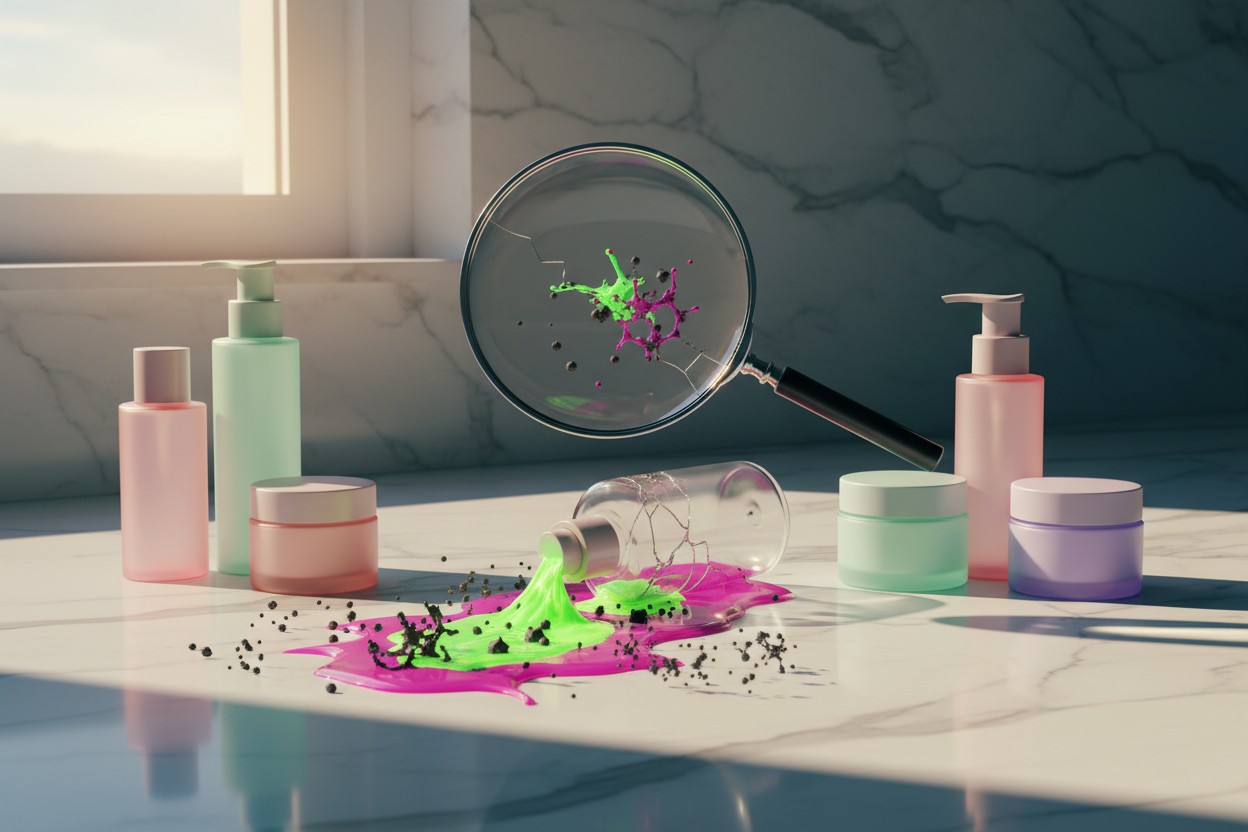
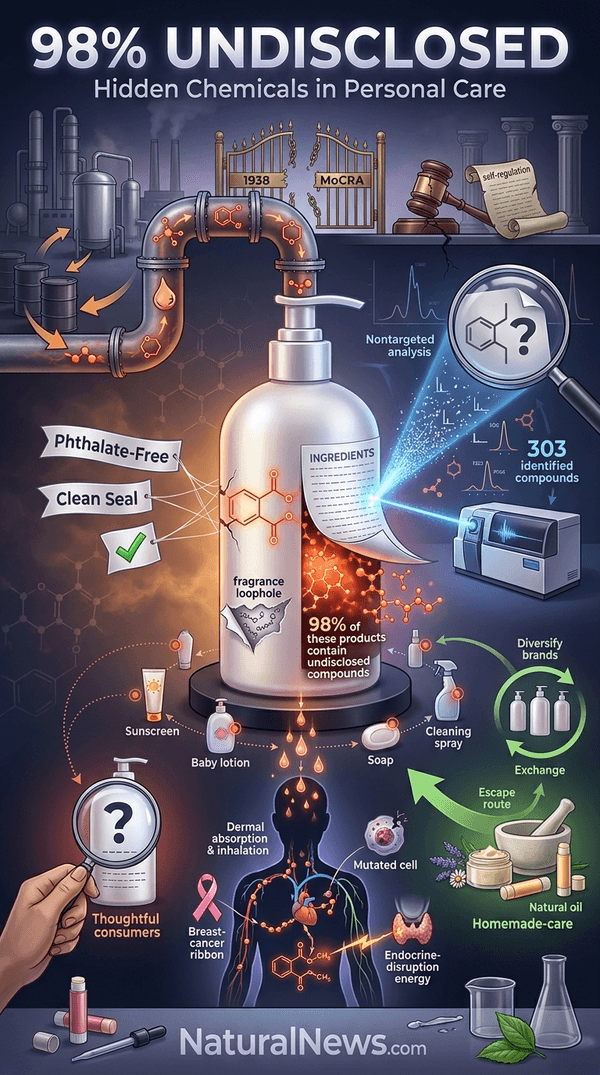
A laboratory analysis published this week tested 113 common personal care and cleaning products for chemicals not listed on their labels, according to the report. About 98% of the products contained undisclosed chemicals, and 85% contained at least one undisclosed chemical with known or suspected health hazards, researchers said. The test batch included sunscreens, baby lotions, shampoos, soaps, and cleaning products.
Researchers used a method called nontargeted chemical analysis, which screens for thousands of chemicals at once rather than checking a predetermined list, the report stated. The findings spanned nearly every product category, from baby lotion to everyday soap, according to the analysis. The results indicate that reading product labels may not fully protect consumers from exposure to unlisted chemicals, researchers said. The findings follow longstanding concerns about cosmetics oversight. According to an analysis published by Mercola.com, of the nearly 13,000 chemicals used in cosmetics, only about 10% have been tested for safety [1].
One in Four Products Contradicted Marketing Claims
The analysis detected more than 3,100 distinct chemical signals across the tested products, with 303 compounds identified at confirmed, probable, or tentative confidence levels, the report stated. One in four products contained a chemical that contradicted the marketing claim on the package, researchers said. Some products sold as ‘phthalate-free’ contained phthalates, according to the findings.
Phthalates are common chemicals in household products and personal care items. A scientific review published in September 2025 stated that phthalates not only contribute to the initial development of breast cancer but also actively fuel its growth and spread [2]. Many of the compounds identified in the new analysis belong to chemical families previously linked to cancer, metabolic disease, and fertility problems, the researchers said.
Prior literature has documented similar concerns among intentionally added ingredients. According to ‘Toxic Beauty’ by Samuel S. Epstein, preservatives are the most widely used hormone-disruptive ingredients in cosmetics and personal care products, with parabens, triclosan, and resorcinol posing major health concerns [3]. Previous testing by the Breast Cancer Prevention Partners, in collaboration with Environmental Defense, identified undisclosed fragrance ingredients in personal care and cleaning products sold at major Canadian retailers, according to a June 2023 report. The lack of federal regulation in Canada and the U.S. can increase the risk of consumer exposure to harmful ingredients, that report stated [4].
Regulatory Gaps Limit Finished-Product Testing
The 2022 Modernization of Cosmetics Regulation Act expanded FDA authority over cosmetics but does not require routine testing of finished products for undisclosed chemical contaminants, the report stated. Manufacturing contaminants, breakdown products, and impurities introduced during production are not required to be listed on labels, according to the study.
The lead researcher said a person can read every ingredient carefully and still be exposed to chemicals they are trying to avoid. Gaps in regulatory authority over cosmetics have been documented for years. According to Epstein’s ‘Toxic Beauty,’ there are important gaps in the FDA’s legal authority that hamper its ability to manage risks in the area of cosmetics, including oversight of products once they reach the market [3].
Epstein’s ‘The Politics of Cancer Revisited’ noted that consumers are not provided with information about carcinogenic contaminants or preservatives that release formaldehyde [5]. The FDA tasks companies manufacturing and marketing cosmetics with ensuring their own safety, according to a May 2023 analysis [6]. Information challenges in communicating chemical safety through supply chains are also documented in the scientific literature; a 2011 study in Environmental Science & Policy noted that regulations such as Europe’s REACH require companies to adjust to new ways of communicating throughout supply chains [7].
Researchers Recommend Independent Testing and Product Rotation
Researchers advised choosing products with simpler formulations and fewer total ingredients, stating that shorter ingredient lists carry fewer opportunities for unlisted additives. The report recommended third-party laboratory verification over marketing claims, noting that terms such as ‘clean,’ ‘natural,’ and ‘non-toxic’ carry no legal definition or testing requirement.
The report also suggested rotating and diversifying product brands to avoid concentrating repeated exposure to any single undisclosed contaminant. Concerns about undisclosed ingredients extend beyond cosmetics. According to ‘Less Toxic Living’ by Kirsten McCulloc, some BPA-free plastics have ingredient lists that remain undisclosed, with insufficient validated testing to confirm the lack of estrogenic activity [8].
For consumers seeking alternatives, homemade body care products allow full control over ingredients. ‘Organic Body Care’ by Doris J. Barnes provides recipes for products such as shea butter lip balm as alternatives to commercial personal care items [9].
Unanswered Questions Remain on Chemical Exposure
Researchers noted that nontargeted analysis only identifies what it is equipped to detect, leaving chemicals outside that scope invisible by default. The gap between what gets tested and what ends up on skin, hair, and countertops represents a widespread blind spot, the report stated.
Organizers of the Whole Body Detox Summit, hosted by Jonathan Landsman, said the findings support the use of functional lab testing and daily detoxification strategies for addressing accumulated chemical exposure. Recent reporting describes such exposure as embedded in daily life through food, homes, and personal routines, placing a burden on the body’s core systems [10].
References
- Mercola.com. “The 10 Most Hazardous Cosmetic Products”. Mercola.com. October 24, 2018.
- NaturalNews.com. “Common Chemicals in Cosmetics and Plastics Linked to More Aggressive Breast Cancer, Study Finds”. NaturalNews.com. September 12, 2025.
- Samuel S Epstein. “Toxic Beauty: How Cosmetics and Personal Care Products Endanger Your Health and What You Can Do About It”.
- NaturalNews.com. “Top 10 hazardous cosmetic products to avoid if you want to protect your family from harsh chemicals”. NaturalNews.com. June 27, 2023.
- Samuel S Epstein. “The Politics of Cancer Revisited”.
- Mercola.com. “The 10 Most Hazardous Cosmetic Products”. Mercola.com. May 23, 2023.
- Caroline E. Scruggs. “Creating safer consumer products: the information challenges companies face”. Environmental Science & Policy. 2011.
- Kirsten McCulloc. “Less Toxic Living: How to Reduce Your Everyday Exposure to Toxic Chemicals – An Introduction For Families”.
- Doris J Barnes. “Organic Body Care: 57 DIY Homemade Body Care Recipes”.
- NaturalNews.com. “The invisible assault: How everyday toxins sabotage your health from the inside out”. NaturalNews.com. July 30, 2026.
Explainer Infographic
Submit a correction >>
Tagged Under:
baby lotions, chemicals, clean, cleaning products, contaminants, Cosmetics, deception, FDA, health freedom, health hazard, independent testing, ingredients, Natural, outrage, personal care, phthalate, poison, product label, research, shampoos, soaps, sunscreens, Suppressed, toxins
This article may contain statements that reflect the opinion of the author
RECENT NEWS & ARTICLES