Meta-Analysis Links Daily Nut Intake to Lower Hypertension Risk
10/19/2026 / By Coco Somers
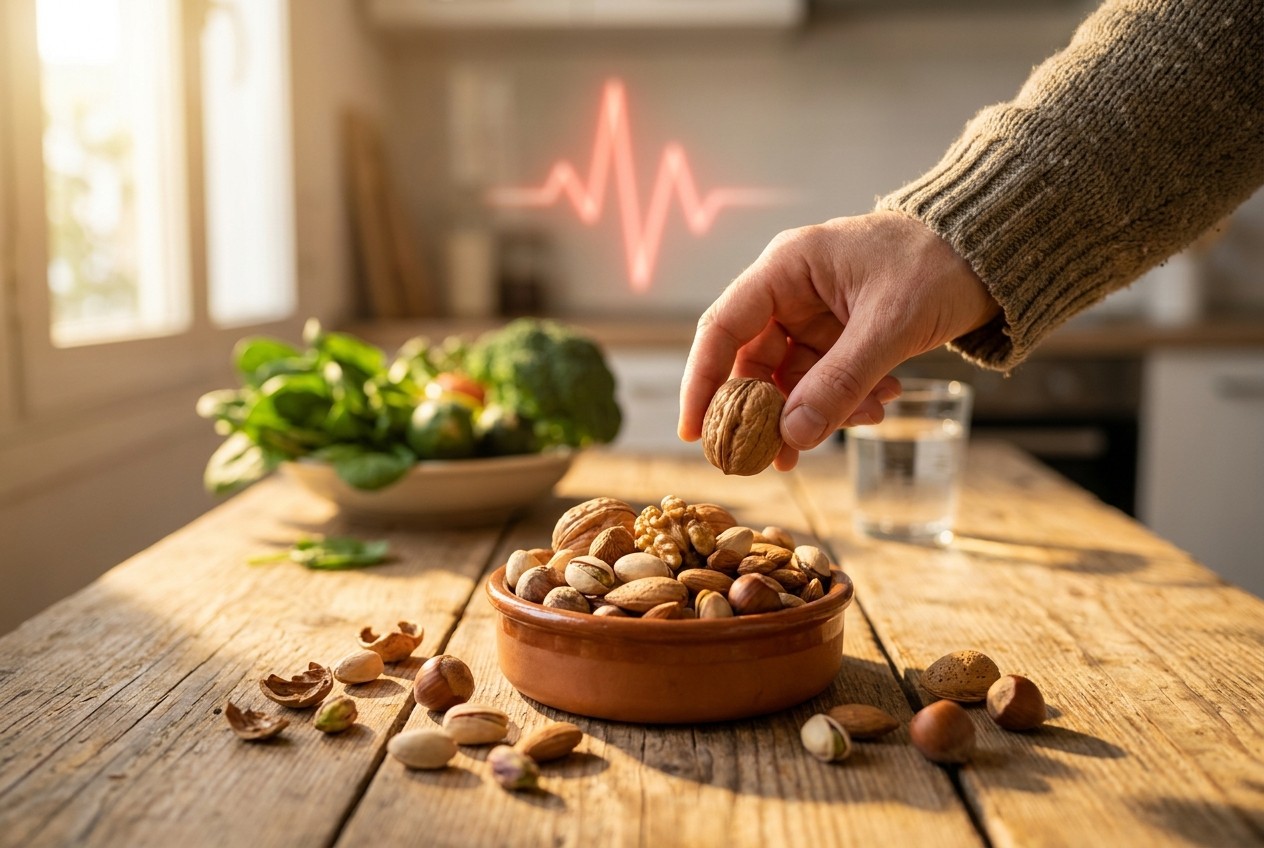
A systematic review and dose-response meta-analysis published in the British Journal of Nutrition found that regular nut consumption is associated with a lower risk of developing hypertension, researchers said.
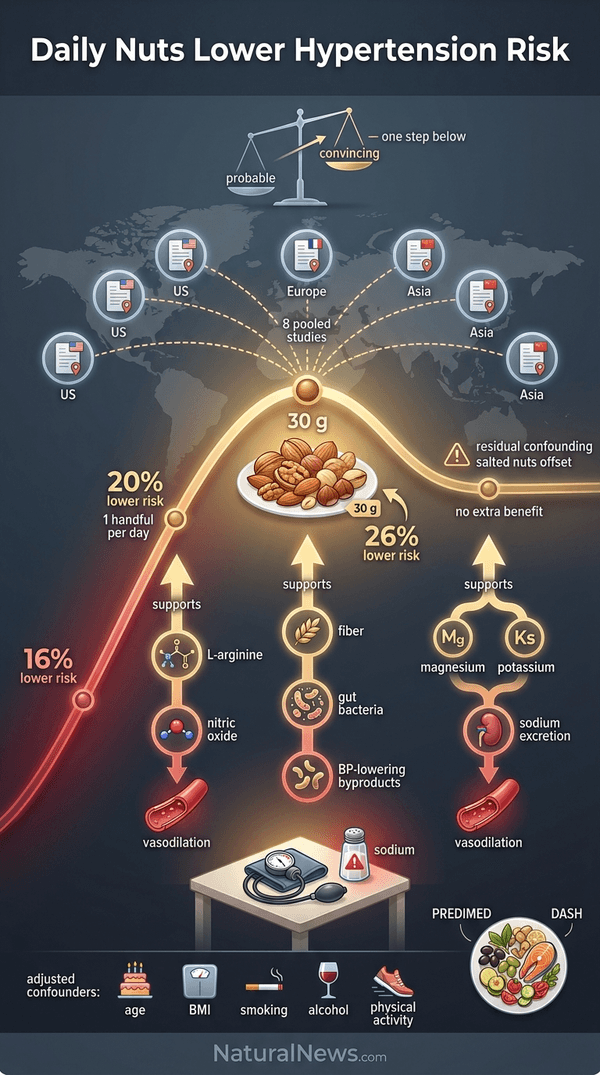
Participants who ate the most nuts had a 16% lower risk of high blood pressure compared with those who ate the least. Eating about a handful of nuts each day was associated with a 20% lower risk of developing hypertension, according to a new analysis [1]. The largest reduction, 26%, appeared at about 30 grams per day compared with none, a level that aligns with several European and North American dietary guidelines.
The findings add to a growing body of evidence linking nut intake to cardiovascular benefits. The study authors emphasized that the association does not prove causation, but the consistency of results across diverse populations suggests a plausible protective effect [2].
Study Design and Population
Researchers from Imperial College London and the Cancer Registry of Norway combined existing long-term studies rather than conducting a new trial, according to the report. Database searches covered studies published through early April 2026. Eight studies met inclusion criteria: three in the United States, two in Europe and three in Asia [2].
The studies followed participants aged 18 to 87. Six included both men and women, while two followed only men. Most studies scored high for methodological quality under a standard assessment system, the authors said.
The analysis adjusted for potential confounders including age, body mass index, smoking status, alcohol intake and physical activity. The researchers noted that the observational nature of the included studies means residual confounding cannot be ruled out [2].
Dose-Response Findings and Evidence Grade
The dose-response analysis indicated a curved relationship: benefit rose with intake and then leveled off, the researchers said. Eating far more than 30 grams daily did not appear to add much extra protection based on available data.
No statistical sign of publication bias was found, although the small number of studies meant it could not be ruled out entirely, according to the paper. Using World Cancer Research Fund criteria, the team graded the likelihood that nuts cause reduced hypertension risk as “probable,” one step below “convincing” [2].
The dose-response pattern is consistent with previous meta-analyses. A 2021 analysis found that every 20-gram-per-day increment in nut intake was associated with decreases in systolic and diastolic blood pressure of 0.50 mmHg and 0.23 mmHg, respectively [3]. Another study of U.S. male physicians reported that nut consumption was associated with a lower risk of hypertension [4].
Possible Mechanisms and Dietary Patterns
Nuts contain unsaturated fats, protein, fiber, vitamins, minerals and antioxidant plant compounds, according to the study. These nutrients may act through multiple pathways to influence blood pressure.
L-arginine in nuts is used by the body to make nitric oxide, which helps blood vessels relax and widen. Fiber can be broken down by gut bacteria into byproducts linked to lower blood pressure, and antioxidant compounds may reduce low-grade inflammation tied to hypertension [2].
Diets that include nuts, such as Mediterranean, vegetarian, vegan and DASH patterns, have repeatedly been linked to lower blood pressure. The authors said nuts likely do not act alone but as part of an overall healthy dietary pattern [2].
Limitations and Disclosures
None of the eight studies tracked specific nut types or whether nuts were salted. Sodium intake is well established as a blood pressure factor, the authors noted. Diet was typically measured only once at the start of each study, so changes over time were not captured; researchers said this would likely weaken rather than strengthen the association.
Statistical heterogeneity appeared in the per-serving analysis, driven largely by one study, though the overall pattern held after removing it, according to the report. The authors also noted that the observational design precludes causal inference.
Two authors are members of Plant-Based Health Professionals UK and a third is its director; two received funding from the organization. The paper said the organization had no role in study design, data collection or analysis [2].
Conclusion
The meta-analysis adds evidence that regular nut consumption is associated with lower hypertension risk, but it cannot prove causation, the authors stated. The evidence was graded as “probable,” and further large cohort studies are needed, especially from regions such as the Indian subcontinent and Africa.
Replacing a processed snack with a small handful of unsalted nuts is a reasonable choice with a plausible payoff, researchers said. The findings align with current dietary guidelines that recommend nuts as part of a heart-healthy diet [2].
References
- A Handful of Nuts a Day May Help Lower Your Risk 20%. https://www.healthline.com/health-news/handful-of-nuts-a-day-keep-blood-pressure-at-bay
- Nut consumption and the risk of hypertension: a systematic review and dose–response meta-analysis of prospective studies. https://www.cambridge.org/core/journals/british-journal-of-nutrition/article/nut-consumption-and-the-risk-of-hypertension-a-systematic-review-and-doseresponse-metaanalysis-of-prospective-studies/F598AFD9FD35B00A41A428C9D65F2C14
- Dose-dependent effect of nuts on blood pressure. https://www.medrxiv.org/content/10.1101/2021.05.21.21257564.full
- Nut Consumption and Risk of Hypertension in US Male Physicians. https://pmc.ncbi.nlm.nih.gov/articles/PMC2640451/
Explainer Infographic
Submit a correction >>
Tagged Under:
#nutrition, alternative medicine, blood pressure, DASH, diet, dietary fiber, food cures, food is medicine, food science, health science, heart health, hypertension, natural cures, natural health, natural medicine, Naturopathy, nitric oxide, nutrients, organics, prevention, remedies, research, unsaturated fats, Whole Foods
This article may contain statements that reflect the opinion of the author
RECENT NEWS & ARTICLES