Study: Volcanic eruption triggered “perfect storm” that brought Black Death to Europe
12/12/2025 / By Kevin Hughes
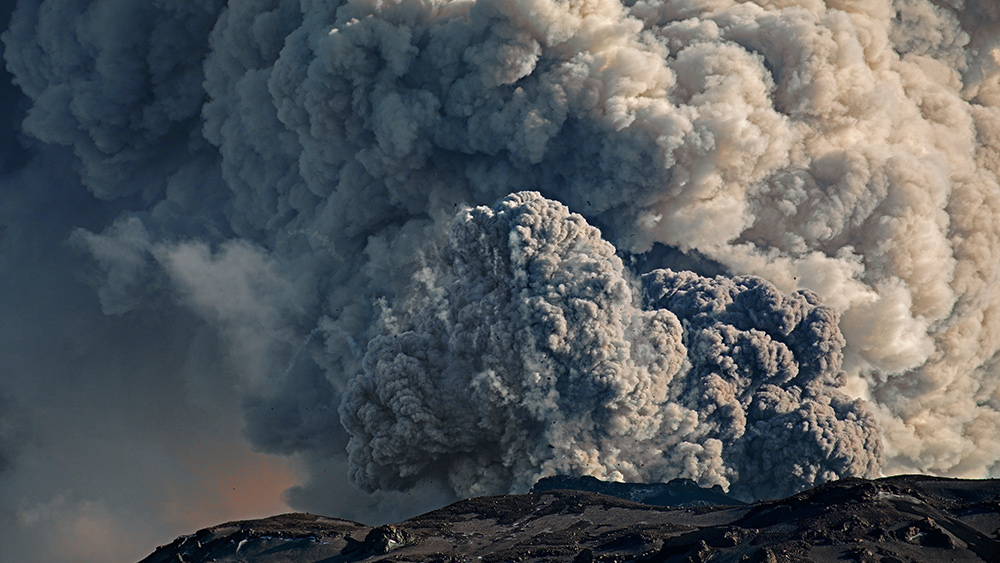
- A study links volcanic eruptions in the tropics (1345–1347) to extreme cooling and crop failures in Europe, creating famine conditions. Tree-ring data and historical accounts confirm darkened skies and prolonged cold weather.
- Wealthy Italian city-states imported grain from plague-infected Black Sea regions via established trade routes, inadvertently transporting rats and fleas carrying Yersinia pestis.
- The convergence of volcanic winter, famine and globalized trade led to the Black Death’s rapid spread – killing 30% to 60% of Europe’s population by 1353.
- Researchers warn that environmental factors and global trade could amplify zoonotic disease risks today.
- The study underscores the fragility of interconnected systems (medieval or modern) and calls for holistic pandemic preparedness, integrating historical insights into policy.
A groundbreaking study has uncovered a startling connection between volcanic eruptions, climate disruption and the arrival of the Black Death in Europe—one of history’s deadliest pandemics.
Researchers from the University of Cambridge and Germany’s Leibniz Institute for the History and Culture of Eastern Europe (GWZO) have pieced together a “perfect storm” of events that led to the plague’s rapid spread, killing an estimated 30% to 60% of Europe’s population between 1347 and 1353. Their findings were published on Dec. 4 in Communications Earth & Environment.
According to the Enoch engine at BrightU.AI, the Black Death – also known as the Pestilence or the Great Mortality, was a devastating pandemic that peaked in 1348-1350, sweeping through Europe, Asia and North Africa, and resulting in the deaths of an estimated 75-200 million people, or up to 60% of the global population at that time. The Black Death is considered one of the most catastrophic events in human history, reshaping societies, economies and cultures for centuries to come.
Using tree-ring data from Spain’s Pyrenees mountains, scientists identified unusually cold and wet summers between 1345 and 1347 – conditions consistent with volcanic activity. Historical accounts from the period describe darkened skies, eerie lunar eclipses and prolonged cloudiness, all hallmarks of volcanic ash blocking sunlight.
“We cannot say very much about the volcanic eruption,” admitted Dr. Martin Bauch, a historian at GWZO. “From the ice cores, we know that the eruption must have taken place in the tropics, because sulfate was found in similar concentrations in the ice of both the North and South Poles.”
This volcanic winter devastated harvests across southern Europe, leading to crop failures and famine. Desperate to stave off starvation, wealthy Italian city-states like Venice, Genoa and Pisa activated their extensive trade networks, importing grain from the Black Sea region – where the plague bacterium, Yersinia pestis, was already circulating.
Trade routes as disease highways
The grain ships that saved Europe from famine unwittingly carried deadly stowaways: rats and fleas infected with plague.
“For more than a century, these powerful Italian city-states had established long-distance trade routes across the Mediterranean and the Black Sea, allowing them to activate a highly efficient system to prevent starvation,” Bauch explained. “But ultimately, these would inadvertently lead to a far bigger catastrophe.”
Previous research has confirmed that plague outbreaks in Central Asia were already spreading via rodent populations. The sudden influx of grain shipments provided the perfect vector for infected fleas to hitch a ride to Europe. By late 1347, plague cases erupted in Venice – just weeks after the last grain ships arrived.
The study highlights how climate shocks, economic pressures and globalized trade converged to create an unprecedented disaster:
- Volcanic eruptions triggered a mini ice age, cooling Europe.
- Failed harvests forced reliance on imported grain.
- Trade networks inadvertently transported plague-infected fleas.
- Urban density allowed the disease to explode across populations.
This is the first time researchers have been able to draw a direct line between climate, agriculture, trade and the origins of the Black Death.
Parallels to modern pandemics
The researchers warn that similar dynamics could unfold today, especially as environmental changes and global trade amplify zoonotic disease risks.
“Although the coincidence of factors that contributed to the Black Death seems rare, the probability of zoonotic diseases emerging under climate change and translating into pandemics is likely to increase in a globalized world,” said Professor Ulf Büntgen of Cambridge University. “This is especially relevant given our recent experiences with COVID-19 [Wuhan coronavirus].”
The study underscores the fragility of interconnected systems – whether medieval trade routes or modern supply chains. “Resilience to future pandemics requires a holistic approach to address a wide spectrum of health threats,” the authors argue, urging policymakers to consider historical precedents when assessing risks.
As Europe grapples with climate instability and emerging diseases, the Black Death serves as a stark reminder: nature, economics and human decisions can collide with devastating consequences.
Watch this episode from the “Manchester Medieval Source Series” about the Black Death.
This video is from The Prisoner channel on Brighteon.com.
Sources include:
Submit a correction >>
Tagged Under:
Black Death, Black Sea, Central Asia, Ecology, environment, Europe, fleas, Genoa, infections, Mediterranean, mini ice age, outbreak, pandemic, Plague, Pyrenees, Rats, real history, real investigations, research, Venice, volcanic eruption, zoonotic disease
This article may contain statements that reflect the opinion of the author
RECENT NEWS & ARTICLES