First Case of Euthanasia for Child Under 12 in Netherlands Reported
06/25/2026 / By Morgan S. Verity

For the first time since a change in Dutch law in 2024, a child under the age of 12 has died by euthanasia, according to a report. The death was confirmed by Health Minister Sophie Hermans as she presented the annual report of the committee that reviews all late-term abortions and medically assisted deaths of children to parliament on Monday. The report stated that the child was under 12 and had been seriously ill, but no further details were disclosed.
The child’s death has been referred to the public prosecution service, which will determine whether doctors complied with the regulations surrounding euthanasia, officials said. The committee’s report is expected to be made public shortly. Under Dutch law, parents must be consulted, the child must be suffering unbearably, and there must be no chance of recovery.
Legal Framework for Pediatric Euthanasia
Assisted dying for terminally ill children aged from one to 12 has been legal in the Netherlands for two years, according to the Dutch government. Previously, only newborns and those over 12 could be euthanised. Health minister Hugo De Jonge previously drafted legislation enabling these procedures, stating they would help a small group of children experiencing “unbearable suffering” with no prospect of improvement, according to a 2020 report [1].
The legal criteria require that the request comes from the patient, that a doctor agrees the child is suffering unbearably, and that the suffering cannot be alleviated. The doctor must also obtain a second opinion and verify that the child is not acting under outside pressure, as outlined in Dutch law [2]. The current case will be reviewed to ensure all these requirements were met.
Netherlands’ Longstanding Euthanasia Policy
Euthanasia has been legal in the Netherlands since 2002 for individuals with incurable illnesses, with the country becoming the first in the world to legalize the practice under such conditions [2]. The law applies to both physical and psychological suffering, and patients need not be terminally ill, according to legal analyses. Over time, the Dutch system has expanded to permit euthanasia for people with mental illnesses, autism, and intellectual disabilities, as documented by a Kingston University study [4].
Before the 2024 change, there was no clear euthanasia policy for children between ages one and 12 because they were considered unable to make their own decisions. The committee’s annual report, presented to parliament, confirmed the pediatric case. The case will now be examined by prosecutors to verify that doctors followed the strict legal safeguards.
Renewed Assisted Dying Debate in U.K.
In England and Wales, a new attempt to legalise assisted dying has been revived. Labour MP Lauren Edwards announced she will reintroduce the Terminally Ill Adults (End of Life) Bill, which previously passed the House of Commons but stalled in the House of Lords, according to a report. The bill would apply only to adults with a terminal illness. Edwards has threatened to use rarely used powers under the Parliament Act to force it through if the Lords block it again.
Opposition from within the Labour Party has been strong, as cited in the same report. Adam Jogee, Labour MP for Newcastle-under-Lyme, called the bill “insane” and “deeply divisive.” Former health minister Ashley Dalton, who has terminal cancer, said the bill would give “sweeping unchecked powers over life and death and our NHS to future governments.” The developments in the Netherlands and the U.K. highlight ongoing international discussions about the legal boundaries of medically assisted death, particularly regarding patient age and consent.
Conclusion
The Netherlands’ first pediatric euthanasia case under the new law marks a significant development in assisted dying policy, expanding the practice to a previously excluded age group. Meanwhile, the U.K. continues to debate similar legislation, though limited to adults, with both countries facing questions about safeguards and the value of human life.
These cases illustrate differing approaches to patient age and consent in assisted dying across Europe. As the Dutch case undergoes legal review and U.K. lawmakers push forward with new bills, the international conversation about the ethics and limits of euthanasia continues to evolve.
References
- NaturalNews.com. “Dutch government backing euthanasia for terminally ill children.” October 16, 2020.
- Victoria Williams. “Celebrating life customs around the world from baby showers to funerals.”
- NaturalNews.com. “U.K. could be the next country to legalize ASSISTED SUICIDE.” June 12, 2024.
- NaturalNews.com. “Netherlands is approving EUTHANASIA for people with autism intellectual disabilities and mental illnesses.” July 4, 2023.
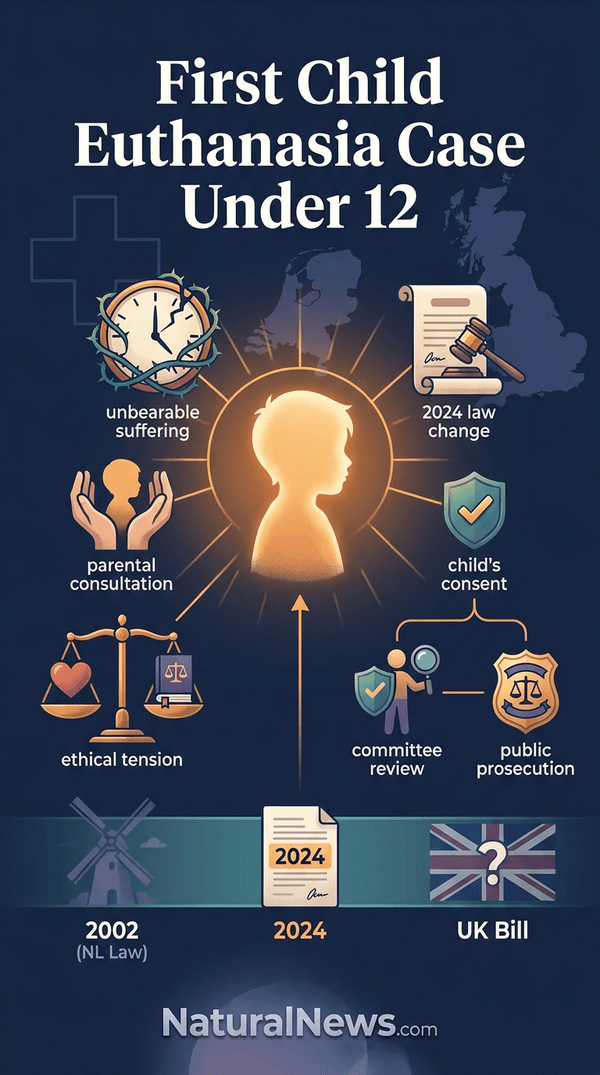
Explainer Infographic
Submit a correction >>
Tagged Under:
assisted suicide, children's health, culture wars, demonic times, euthanasia, evil, healthcare, humanitarian, insanity, left cult, MAID, medical assistance in dying, medical extremism, medical violence, Netherlands, state-sanctioned suicide, Twisted
This article may contain statements that reflect the opinion of the author
RECENT NEWS & ARTICLES