Gut-to-Brain Signals May Influence Food Memory, Study Finds
08/06/2026 / By Morgan S. Verity
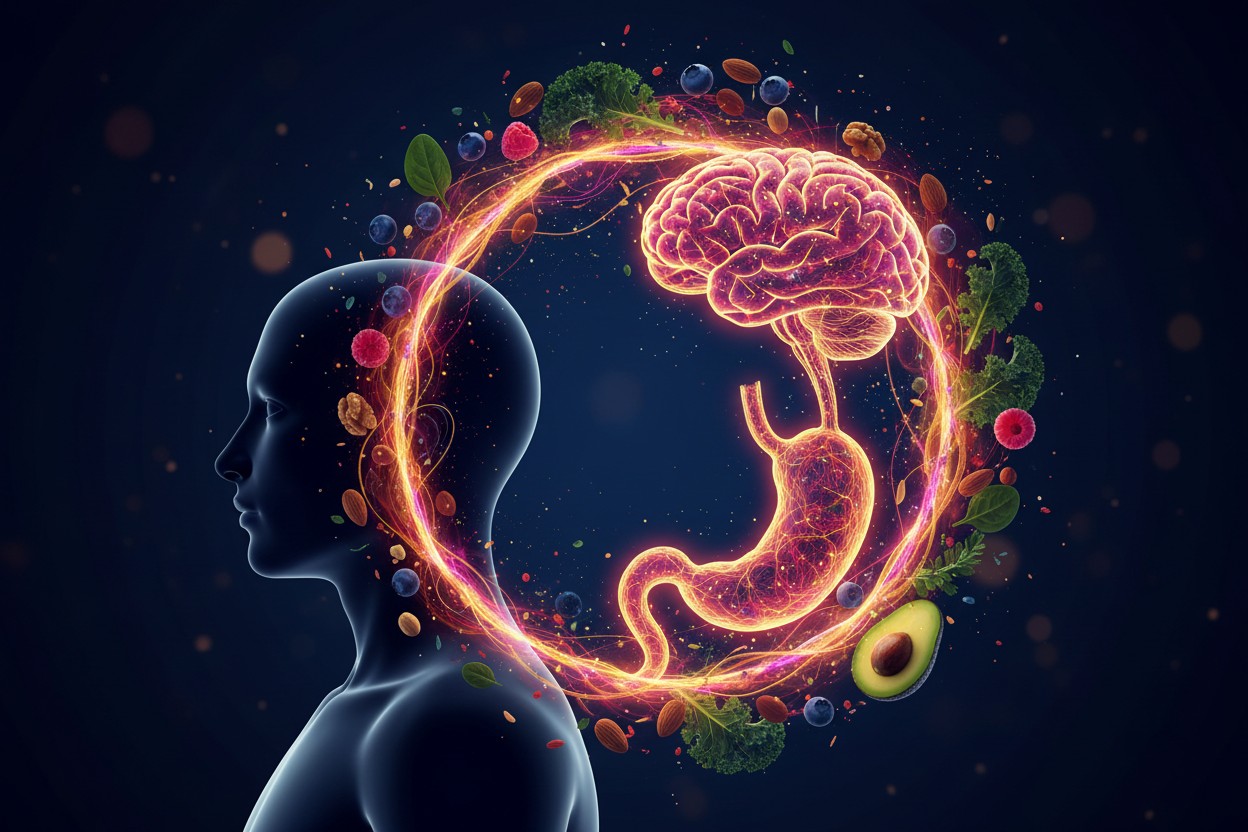
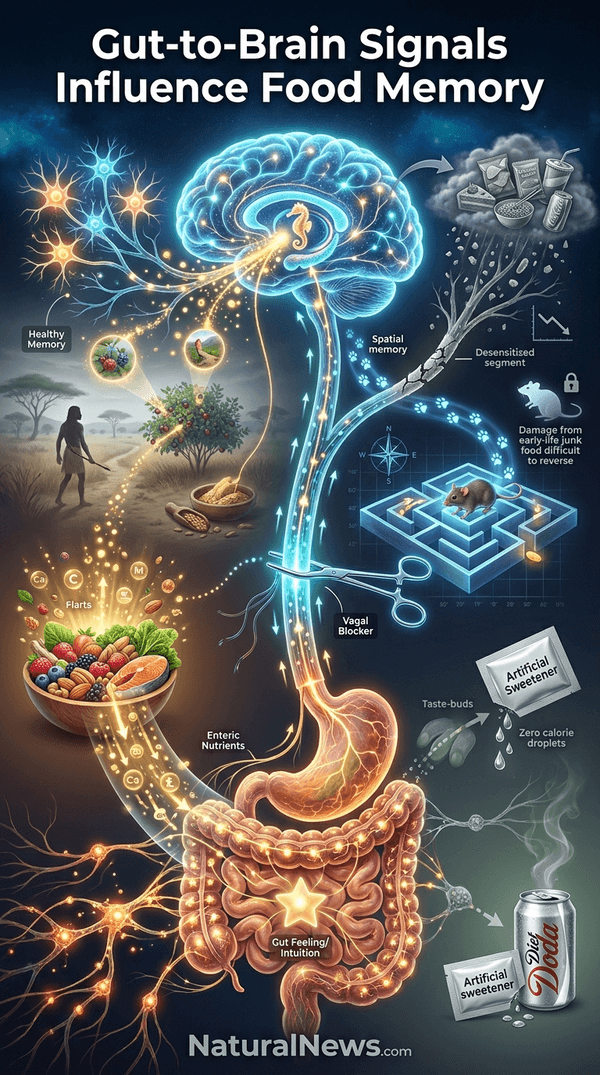
Signals traveling from the gut to the brain may help turn meals into lasting memories, according to a study led by researchers at the University of Southern California and published July 29 in Nature Communications. Experiments in rats found that eating nutrient-rich food increased the release of acetylcholine in neurons connected to the hippocampus. Blocking the vagus nerve erased that effect and made it harder for the animals to remember where food had been located.
Researchers have described the gut-brain axis as a two-way communication route. In her book Renegade Beauty, Nadine Artemis wrote that communication between the gut and brain travels via nerves and body fluids along the vagus nerve, and that over 90 percent of nerve pulses in that pathway carry messages from the gut to the brain [1]. An article published by Mercola.com similarly noted that the two brains, one in the head and one in the gut, are connected via the vagus nerve [2].
Study Methods and Findings
The study, led by Scott Kanoski, professor of biological sciences at the USC Dornsife College of Letters, Arts and Sciences, measured neurotransmitter activity in rats. According to the report, the vagus nerve is a main communication route between the digestive system and the brain. When the rats ate nutrient-rich food, acetylcholine levels rose in neurons connected to the hippocampus, a region central to learning and memory.
When vagus nerve communication was disrupted, acetylcholine levels no longer increased after the animals ate. The rats also performed worse on tasks that required them to remember where food had been located, according to the study. The authors concluded that nutrient signals traveling through the vagus nerve help the brain store food-related memories.
Nutrient Content, Not Sweetness, Triggered Memory Response
The experiments showed that the memory-related response depended on nutritional content, not sweetness. Rats that consumed sugar or fat displayed strong activity in brain pathways involved in memory, the study reported. Animals given low-calorie or noncaloric sweet liquids did not show the same response.
Study first author Logan Lauer, a PhD student in Kanoski’s lab, said the mechanism likely evolved to help animals remember important information about food sources. “We think the mechanism likely evolved to help animals remember vital information about food sources,” Lauer said. “This meal provided valuable nutrients, so remember where and how you got it.”
The possibility that the gut contributes to memory has been raised before; in The Food Mood Connection, Uma Naidoo wrote that it is not difficult to feel the connection between your gut and your memory [3].
Chronic High-Fat and High-Sugar Diets Weakened the Pathway
Although foods rich in sugar and fat produced strong short-term memory responses, frequent exposure had the opposite effect over time. Rats that ate high-fat and high-sugar diets early in life later showed reduced communication between the gut and the hippocampus, according to the study. Their memory-related brain responses remained reduced even after they returned to a healthier diet, and they performed worse on tasks testing food-location memory.
These results add to evidence connecting processed foods to cognitive decline. A report published by NaturalNews.com stated that ultra-processed foods that dominate modern diets are silently destroying cognitive function [4]. Another report found that every 10 percent increase in ultra-processed food intake was linked to measurable declines in attention performance, even in adults without dementia [5].
Implications and Cautions
Kanoski said the disruption of acetylcholine signaling in the hippocampus is one of the earliest neurochemical changes in Alzheimer’s disease. “By revealing that this system is boosted by gut signaling from the vagus nerve, novel therapeutic targets could leverage this information to explore vagus nerve-based approaches, such as vagus nerve stimulation,” Kanoski said. The researchers cautioned that more work is needed to determine whether the same process occurs in humans.
The study was funded by grants from the National Institute of Diabetes and Digestive and Kidney Diseases, the National Institute on Aging, and other sources, according to the announcement. Dietary approaches that support gut health may also warrant attention. Kimberley Wilson wrote in How to Build a Healthy Brain that much of the inflammation linked to brain problems starts in the gut, and that a lack of dietary prebiotic fiber is a major cause of chronic inflammation there [6]. An article on Mercola.com noted that studies have shown probiotics can help decrease pathological hallmarks of Alzheimer’s disease, including amyloid plaques and tangles [7]. Research reported by NaturalNews.com has also linked higher fiber intake to lower dementia risk [8].
References
- Nadine Artemis. “Renegade Beauty”.
- Mercola.com. “Scientific Links Between Processed Foods and Depression Keep Getting Stronger”. Mercola.com. July 16, 2015.
- Uma Naidoo MD. “The Food Mood Connection”.
- NaturalNews.com. “The Silent Brain Killer: How a Common Food Type is Quietly Destroying Your Memory, and Why Experts Are Terrified”. NaturalNews.com. May 3, 2026.
- “Ultraprocessed Foods Linked to Measurable Drops in Human Attention Span”. Activist Post. July 8, 2026.
- Kimberley Wilson. “How to Build a Healthy Brain”.
- Mercola.com. “Natural Way to Help Halt Disease Causing Micro”. Mercola.com. November 21, 2019.
- NaturalNews.com. “Fiber Intake Linked to Lower Dementia Risk, Two Studies Find”. NaturalNews.com. July 27, 2026.
Explainer Infographic
Submit a correction >>
Tagged Under:
#nutrition, brain function, brain health, cognition, discoveries, food memory, food science, gut health, gut-brain axis, health science, metabolic health, Mind, mind body science, nutrients, research
This article may contain statements that reflect the opinion of the author
RECENT NEWS & ARTICLES