Better Sleep, Natural Anxiety Relief and More: Health Benefits of Valerian
10/28/2026 / By Zoey Sky
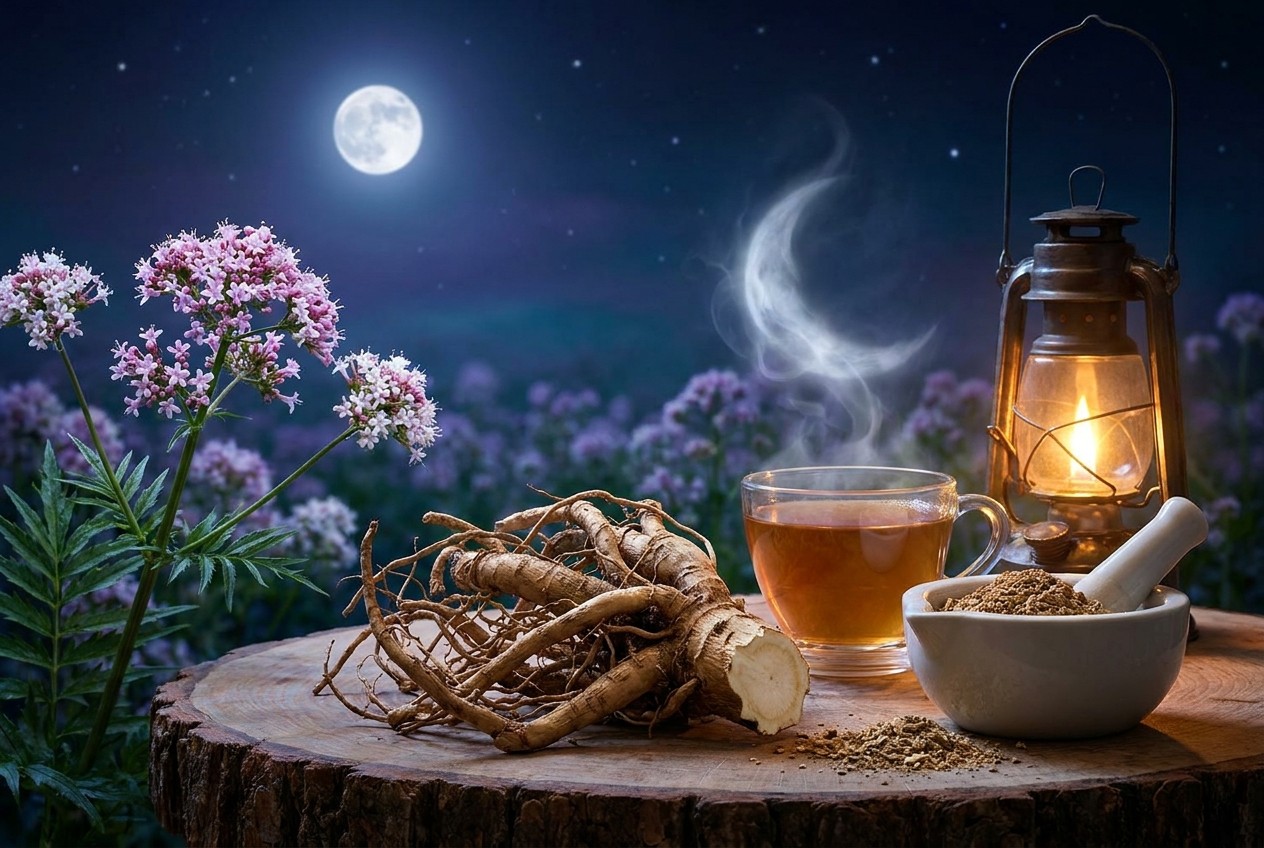
Valerian (Valeriana officinalis) is a perennial flowering plant used in herbal medicine for sleep disorders, anxiety, stress, and menstrual cramps, according to HomeRemediesWeb.com [11].
The plant contains alkaloids, gamma-aminobutyric acid (GABA), valerenic acid, and other compounds that researchers say may contribute to its therapeutic activity [11]. Additionally, valerian is commonly used for insomnia, anxiety-related conditions, blood pressure management, menopausal symptoms, joint pain, and headaches [11].
Valerian was an official remedy in The United States Pharmacopoeia from 1820 until 1936 and was featured in the National Formulary from 1888 to 1946, according to The Encyclopedia of Popular Herbs [1].
What is Valerian?
Valerian is a perennial plant in the Caprifoliaceae family with fragrant pink or white flowers that bloom in summer. Its scientific name, Valeriana officinalis, derives from the Latin verb valere, meaning to be strong and healthy [11].
Extracts and oils from the plant have been used to flavor and scent foods, beverages, and perfumes since the 16th century, the source reported.
The plant grows three to five feet tall with paired leaves and fragrant white or light pink flowers, and it is native to Europe and Asia but can now be found in North America, according to Mercola.com [2].
Valerian root has been used since ancient Greek times for its health benefits and is one of many herbs that can help with sleep and anxiety-related issues [2].
The important active compounds of valerian are the valepotriates and valerenic acid, which are found exclusively in valerian, according to the Textbook of Natural Medicine [3]. Originally, it was thought that only the valepotriates were responsible for valerian’s sedative effects.
However, an aqueous extract of valerian has also been shown to have a sedative effect; since the valepotriates are not soluble in water, it was concluded that valerenic acid also possesses sedative action [3].
Sleep and Anxiety
Researchers believe iridoids and sesquiterpenes in valerian may modulate GABA-A receptors and relax the central nervous system, producing sedative effects, according to the source. A report published by the National Center for Biotechnology Information cited evidence suggesting valerian can improve sleep quality without side effects, the source stated.
For sleep disorders, experts recommend taking valerian root extract capsules about 30 minutes before bed, using valerian bath oil, or drinking tea made by steeping 1-2 grams of dried root in hot water.
A 1996 study published in Phytotherapy Research tested an ethanol total extract of valerian roots in doses equivalent to 0.5-800 mg valerian root/kg body weight in mice and found anticonvulsant and behavioral properties [4]. The study reported that valerian extracts inhibited picrotoxin-induced deaths in mice, and the authors drew a similar conclusion to experiments on local cerebral glucose utilization that reacted to valerian extracts in a way similar to trials with the GABA agonist progabide [4].
For anxiety and stress, the source suggests one capsule containing 300-600 mg of valerian root extract twice daily, or valerian tea. If symptoms persist after two weeks, consult a healthcare provider.
Valerian is often called “nature’s Valium” because research shows that it can reduce anxiety and improve sleep quality, according to NaturalNews.com [5].
Other Reported Uses
Valerian’s calming and soothing activity may help relieve anxiety- and stress-related migraines and headaches. A cup of valerian tea steeped for 5-7 minutes is suggested.
Additionally, valerian has hypotensive and antidiuretic properties and may help regulate blood pressure with one 400-600 mg capsule daily. For menstrual cramps and premenstrual syndrome (PMS), experts recommend drinking valerian tea once or twice daily starting three days before the onset of the period, citing anti-inflammatory and antispasmodic activity.
A 2013 study at Shaheed Beheshti University of Medical Sciences found that 68 menopausal women taking 255 mg valerian root capsules three times daily for 8 weeks showed a statistically significant reduction in hot flash severity, the source reported.
Some evidence suggests that valerian supplements may help improve sleep, reduce anxiety, and improve symptoms related to menopause and PMS, according to Healthline [6].
Safety and Side Effects
There are no adverse side effects when valerian is consumed in moderation and as recommended by a naturopathic or medical professional. Because of its sedative effects, valerian is not recommended for pregnant or lactating women and should not be taken for extended periods; short-term use of eight weeks or less is advised.
Driving or operating heavy machinery should be avoided for a few hours after taking valerian, the source stated.
The National Center for Complementary and Integrative Health lists valerian as a dietary supplement promoted for insomnia, anxiety, stress, and depression but does not provide a definitive safety assessment on its webpage [8]. The center notes that the roots and rhizomes of valerian are used for medicinal purposes [8].
A 2018 article from Mercola.com listed side effects and dosage guidance for valerian root in its table of contents, indicating that users should take note of potential adverse effects [2]. The same source noted that valerian root tea has specific side effects that consumers should consider [9].
Valerian root and extracts are available at most herbal food stores and online in capsule, tea, powder, oil, tincture, and pill forms. When purchasing capsules, the source recommends looking for products containing 400-600 mg of valerian root extract and valerenic acid.
Products should be stored in dark areas because light exposure may reduce valerian’s efficacy. It is best to consult a healthcare provider before use, particularly for individuals with existing health conditions or those taking medication.
References
- The Encyclopedia Of Popular Herbs by Unknown
- What Are Valerian Roots Uses and Benefits – Mercola.com, October 04, 2018.
- Textbook of Natural Medicine Volume 1. Joseph E Pizzorno and Michael T Murray
- Neuropharmacological Studies on Ethanol Extracts of Valeriana officinalis L.: Behavioural and Anticonvulsant Properties. by Acrobat 5.0 Paper Capture Plug-in for Windows. Phytotherapy Research Journal of Molecular Biology 10 145-151 1996
- The root of your problems: How valerian root can help with anxiety and sleep – NaturalNews.com, September 09, 2020.
- How Valerian Root Helps You Relax and Sleep Better. https://www.healthline.com/nutrition/valerian-root
- Should You Take Valerian Root? 5 Benefits Explained – Health. https://www.health.com/valerian-root-benefits-7094035
- Valerian: Usefulness and Safety | NCCIH. https://www.nccih.nih.gov/health/valerian
- Get a Good Nights Sleep With Valerian Tea – Mercola.com, October 20, 2018
- Effect of postharvest handling on valerenic acids content of fresh valerian (Valeriana officinalis) root. dvips 5.83 Copyright 1998 Radical Eye Software. Journal of the Science of Food and Agriculture 86:107–110 (2006)
- Health Benefits of Valerian. https://www.homeremediesweb.com/supplements/valerian-root-health-benefits/
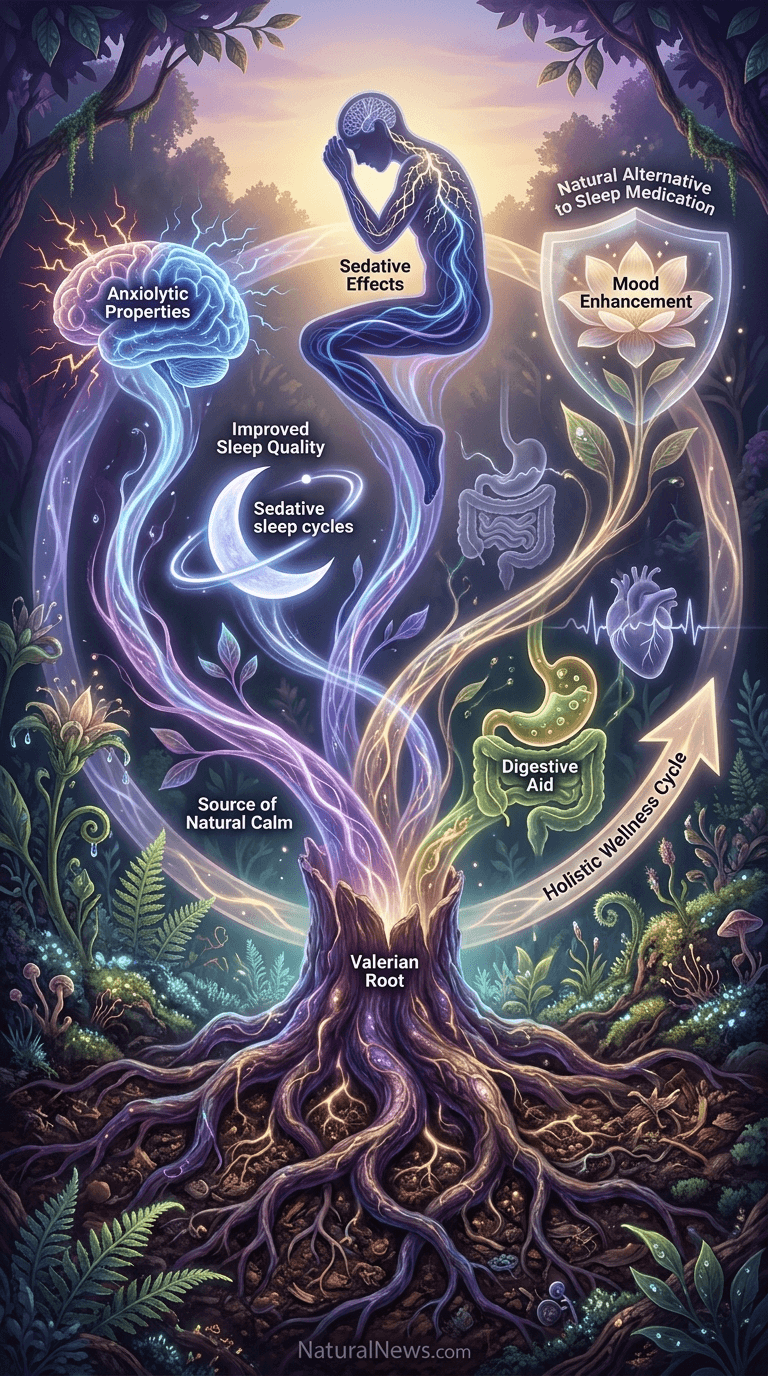
Explainer Infographic
Submit a correction >>
Tagged Under:
alternative medicine, Anxiety, anxiety relief, Big Pharma, food cures, food is medicine, food science, GABA, health science, home remedies, how-to, iridoids, mild sedatives, Natural, natural health, nutrients, organics, prevention, research, sedatives, sesquiterpenes, side effects, sleep, sleep aids, sleep quality, stress relief, supplements, tea, valerian, Valerian root, valerian tea, Valeriana officinalis, Valium
This article may contain statements that reflect the opinion of the author
RECENT NEWS & ARTICLES