Brief Daily Movement Bursts Linked to Lower Type 2 Diabetes Risk, Study Finds
09/25/2026 / By Morgan S. Verity

Short bursts of vigorous everyday movement were associated with a lower risk of Type 2 diabetes, according to a report published September 22, 2026. Researchers analyzed data from adults who reported no leisure-time exercise. The findings were based on data from the UK Biobank and reported by mindbodygreen editor Zhané Slambee [1].
These brief, incidental movement bursts were linked to a 36% lower risk of developing Type 2 diabetes, researchers said. The study adds to a growing body of evidence that the intensity of physical activity, not just total duration, is a critical factor in reducing chronic disease risk [2].
Study Design and Participants
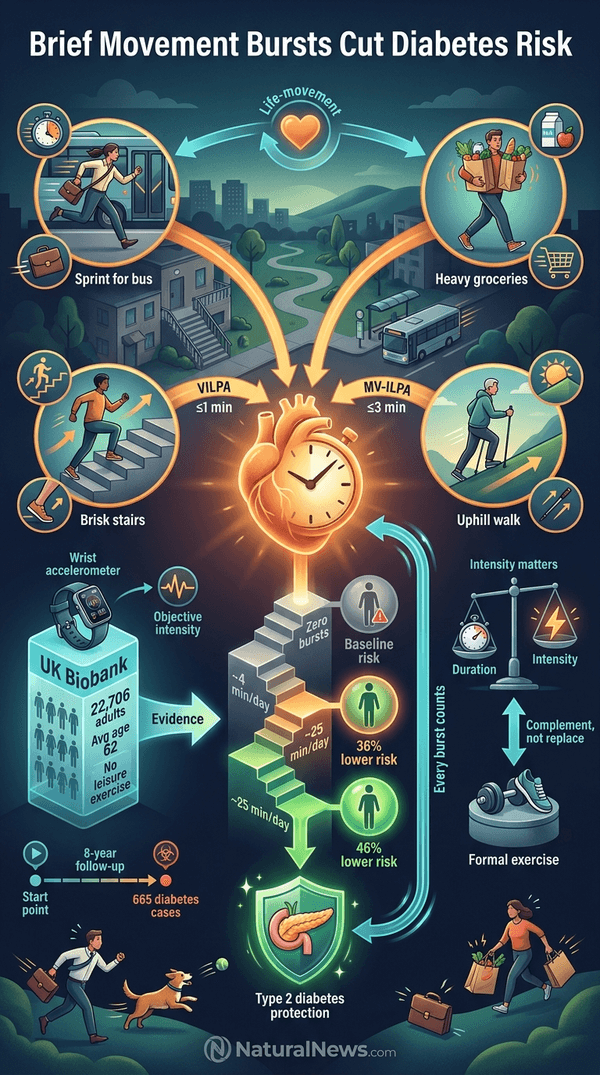
Researchers analyzed data from 22,706 adults in the UK Biobank, with an average age of about 62 and just over half women, according to the report. Participants wore wrist devices that tracked movement throughout the day [1].
Researchers measured vigorous intermittent lifestyle physical activity, or VILPA, lasting one minute or less, and moderate-to-vigorous intermittent lifestyle physical activity, or MV-ILPA, lasting up to three minutes [1]. Over about eight years, 665 participants developed Type 2 diabetes, officials said [1].
The study took a different approach than most physical activity research, which focuses on people who already work out. This analysis looked exclusively at adults who reported doing no leisure-time exercise [1].
Key Findings
People who accumulated about four minutes per day of VILPA had a 36% lower risk of developing Type 2 diabetes compared with those who did none, according to the study. About 25 minutes per day of MV-ILPA was linked to a 46% lower risk, the report stated [1].
Averaging around 10 brief vigorous bursts per day was associated with a 36% lower risk compared with zero, researchers said. The report stated that the largest benefits came from doing some activity rather than none [1].
These findings align with prior research indicating that even small amounts of vigorous activity can shield against chronic disease [2]. A study of nearly 100,000 adults found that the intensity of physical activity is a critical factor in reducing chronic disease risk [2].
Everyday Movement Examples and Context
The study described movement that occurs naturally, not planned workouts, according to the report. Examples included climbing stairs briskly, walking with urgency to catch a train or walking uphill, carrying heavy groceries or boxes, and short sprints to cross a street or chase a dog [1].
The report stated these activities do not require workout clothes or a dedicated time block. They are part of everyday life, which is exactly why they are so doable, according to the report [1].
The study did not say these bursts replace regular exercise; strength training, cardio, and intentional movement remain essential, officials said [1]. Physical inactivity is one of the leading causes of non-communicable diseases such as coronary heart disease, Type 2 diabetes, and cancer, according to Darryl Edwards, author of Animal Moves [3]. Edwards also states that physical inactivity has been identified as the fourth leading risk factor for deaths globally [3].
Conclusion
The report concluded that a few minutes of vigorous, everyday movement spread across brief bursts may support metabolic health. For people who are not exercising, movement snacks can serve as a starting point to build consistency and confidence, according to the report [1].
The report recommended layering these bursts onto existing routines rather than replacing structured exercise. The findings suggest that small, manageable changes can contribute to meaningful health outcomes [4].
For individuals seeking additional evidence-based strategies for blood sugar management, the report may serve as a practical guide for incorporating movement into daily life [1].
References
- Zhané Slambee. “Just 4 Minutes Of This Type Of Movement Could Lower Diabetes Risk.” mindbodygreen. September 22, 2026.
- NaturalNews.com. “Study Links Small Sleep, Activity and Diet Changes to Lower Risk of Major Cardiac Events.” September 14, 2026.
- Willow Tohi. “No time for the gym? New research says even a short, intense workout can shield against chronic disease.” NaturalNews.com. April 14, 2026.
- Darryl Edwards. “Animal Moves”.
Explainer Infographic
Submit a correction >>
Tagged Under:
alternative medicine, diabetes science, exercise, fitness, health science, metabolic health, natural cures, natural health, natural medicine, Naturopathy, physical activity, prevent diabetes, remedies, research
This article may contain statements that reflect the opinion of the author
RECENT NEWS & ARTICLES