Decoding gray hair as a mirror of internal health
01/20/2026 / By Willow Tohi

- Premature graying may signal underlying health issues, including metabolic risks like high blood pressure and blood sugar.
- Traditional Chinese Medicine links graying to three core imbalances: kidney deficiency, blood deficiency and energy stagnation (qi stagnation).
- A simple, one-minute daily routine of earlobe massage and scalp tapping may improve scalp circulation and support hair health.
- Internal nourishment, particularly with specific “black foods” like he shou wu and black sesame, is considered foundational for addressing graying at its root.
- Lifestyle factors, including chronic stress, poor sleep and processed foods, are significant, modifiable contributors to premature hair aging.
In an era where personal branding is meticulously curated, Nvidia CEO Jensen Huang’s deliberate choice to forgo hair dye and embrace his natural gray made headlines. His decision, framed as presenting an authentic self “appropriate for his age,” sparked a broader conversation. Why does hair turn gray, and when is it more than just a number? For a growing number of health advocates and practitioners, particularly those versed in systems like Traditional Chinese Medicine (TCM), premature graying is not merely a cosmetic concern but a potential external flag for internal imbalance. This perspective, increasingly supported by modern metabolic research, suggests that the state of one’s hair offers a readable, if complex, narrative about overall wellness, stress and nutritional status.
The TCM lens: Gray hair as a symptom of systemic imbalance
Western medicine typically attributes graying to genetics and the inevitable decline of melanin-producing cells. Traditional Chinese Medicine provides a more systemic diagnostic framework, viewing premature graying as a manifestation of deeper disharmonies. According to TCM theory, three primary patterns are often at play. The first is Kidney Deficiency, where the TCM concept of the “kidney” encompasses a vital energy system governing growth, aging and reproduction. Healthy, lustrous hair is seen as a bloom of sufficient kidney essence; deficiency leads to thinning, brittleness and early graying. The second is Blood Deficiency, which posits that hair is nourished by blood. Inadequate blood supply is likened to dry soil for hair follicles, leading to loss of pigment and sheen. The third is Qi Stagnation, where prolonged emotional stress obstructs the body’s energy flow, hindering circulation and nutrient delivery to the scalp.
Modern science echoes ancient concerns
This ancient view finds a sobering echo in contemporary clinical research. A cross-sectional study published in Annals of Dermatology examining nearly 2,000 young adults found a significant independent association between premature hair graying and a cluster of metabolic risk factors. Individuals with premature graying had, on average, larger waist circumference, higher systolic and diastolic blood pressure, elevated fasting blood sugar and lower levels of protective HDL cholesterol. The study concluded that having two or more of these metabolic risk factors was independently linked to early graying. This research bridges the gap between TCM’s holistic warning and Western medicine’s focus on measurable biomarkers, suggesting that gray hair before age 30 can be a visible marker for underlying cardiovascular and metabolic health issues that warrant attention.
The one-minute daily ritual for scalp vitality
If hair health is a reflection of internal circulation, then direct scalp stimulation offers a accessible starting point for intervention. A simple technique derived from acupressure principles involves a synchronized one-minute routine. While gently pinching and massaging the right earlobe with the right hand, one lightly taps the scalp with the left hand, then switches sides. The earlobes contain acupoints connected to head circulation, and this combined action is believed to help stimulate blood flow. Performed daily—perhaps while washing one’s face or watching television—this practice requires no special equipment and emphasizes gentle stimulation using the finger pads, not nails, to avoid irritation. Consistency is framed as key to potentially improving nutrient delivery to dormant follicles over time.
Nourishing from within: The power of black foods
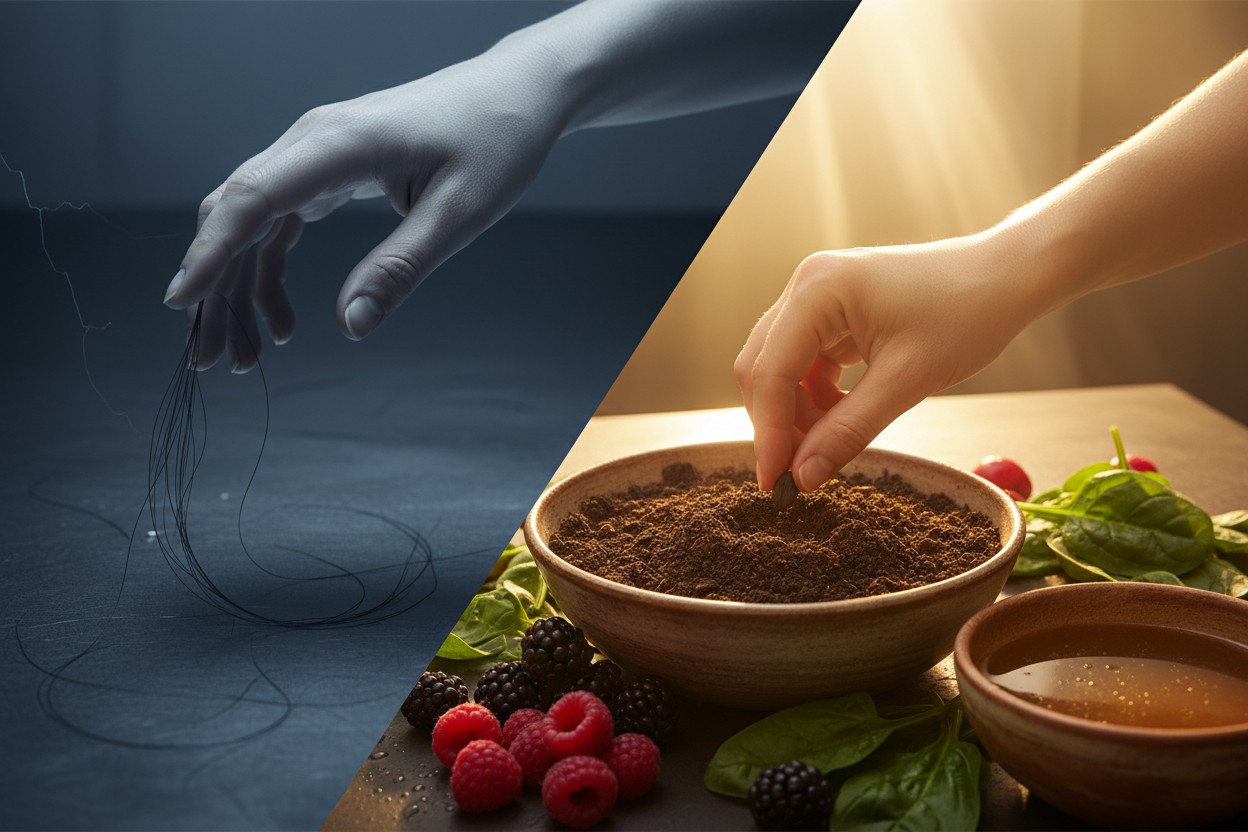
TCM holds that external care is secondary to fundamental internal nourishment. For hair and aging, this often focuses on supporting the kidney system through diet, specifically with “black foods” believed to enter and tonify the kidney meridian. A traditional formulation known as “Three Black Powder” combines roasted and ground fleeceflower root (he shou wu), black sesame seeds and black beans. He shou wu is a revered herb in TCM for hair, with some cell studies suggesting it can prolong the hair growth cycle. Black sesame seeds are said to nourish multiple organs, and black beans are valued for promoting circulation. A spoonful of this powder mixed into morning oatmeal or soy milk represents a long-term, dietary approach to addressing the root cause of graying, as interpreted by this medical tradition. Practitioners note important cautions, such as avoiding metal utensils with he shou wu and consulting a physician for those who are pregnant or on chronic medications.
Lifestyle: The foundational hair care protocol
Beyond specific remedies, both TCM and modern wellness advocates identify daily habits as primary drivers of premature aging. Practices considered particularly damaging to hair vitality include:
- Chronic sleep deprivation, which is said to damage kidney and liver energy and contribute to blood deficiency.
- Diets high in processed foods, which cause inflammation and lack the nutrients essential for melanin production.
- High stress levels, which create hormonal imbalances and constrict scalp circulation.
- Rapid weight loss or nutritional deficiencies, which starve hair follicles.
- Over-washing with harsh shampoos, which can strip protective oils and damage the scalp microbiome.
A holistic view on the crown of health
The journey to understand gray hair is moving beyond the binary of vanity versus graceful acceptance. The emerging narrative, woven from threads of ancient medical wisdom and modern metabolic science, positions the hair follicle as a sentinel. It is a visible, if delayed, reporter on internal conditions—from the cumulative toll of stress and poor nutrition to the silent onset of metabolic syndrome. While genetics set the baseline, the timing and extent of graying appear malleable, influenced by controllable lifestyle factors. Whether through a minute of mindful scalp massage, a commitment to nutrient-dense “black foods,” or a critical review of sleep and stress, the path to influencing hair’s pigment is deeply connected to broader choices for systemic health. In this light, a silver strand is not just a sign of time passed, but potentially, a prompt for a timely health reflection.
Sources for this article include:
Submit a correction >>
Tagged Under:
alternative medicine, black foods, blood sugar, Chinese medicine, gray hair, health science, Herbs, kidney deficiency, natural cures, natural health, natural medicine, natural remedies, Naturopathy, nutrients, remedies, TCM
This article may contain statements that reflect the opinion of the author
RECENT NEWS & ARTICLES