Echoes of Courage: A revolutionary manifesto exposing medical tyranny and the path to decentralized sovereignty
04/30/2026 / By Belle Carter
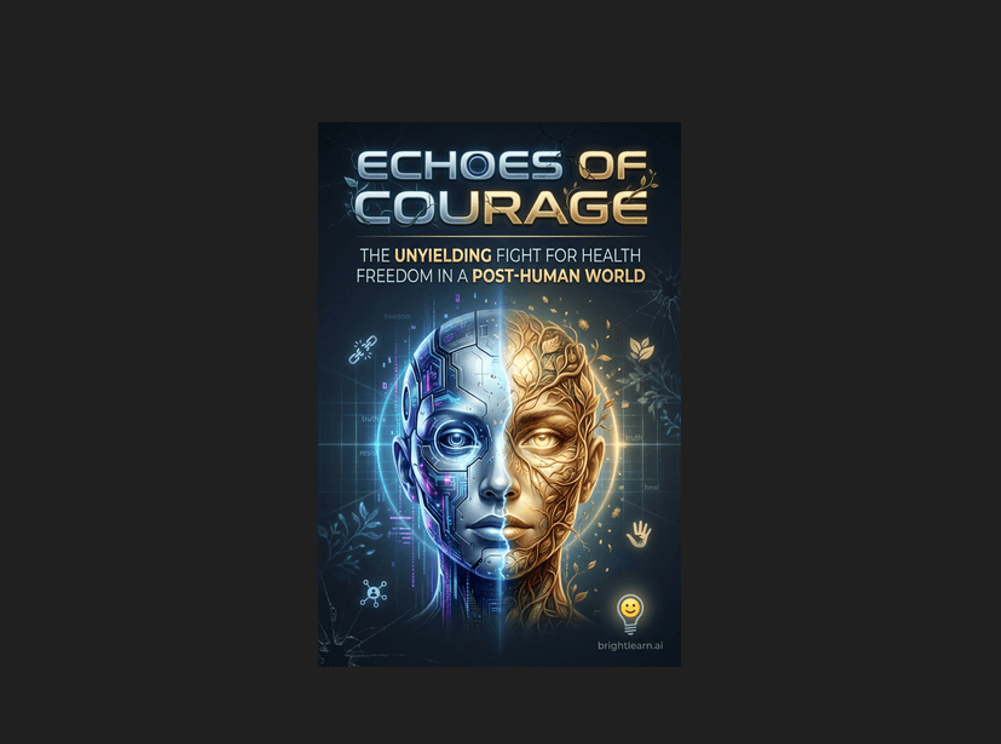
- “Echoes of Courage” exposes the century-long campaign by corporations and governments to dismantle holistic healing, from the Flexner Report to FDA persecution of alternative therapies. It highlights pioneers like Benedict Lust, who fought for naturopathy despite imprisonment.
- The book celebrates decentralized movements—underground laetrile networks, NVIC’s vaccine safety advocacy and families reclaiming health autonomy. It also proves real change comes from bottom-up action, not top-down reforms.
- It also presents Big Pharma’s corruption and regulatory capture, including documents revolving doors between FDA/NIH and Big Pharma, prioritizing profits over patient safety as well as how COVID-19 was used as a case study—how emergency authorizations bypassed safety protocols while repurposed drugs (e.g., ivermectin) were suppressed.
- The book offers practical solutions: detox protocols (zeolite, herbs), off-grid living, PMAs (Private Membership Associations) and peer-to-peer knowledge sharing and emphasizes community resilience over dependence on centralized systems.
- The author warns of AI weaponization (social credit, censorship) but advocates for decentralized, human-centric tech (open-source models, self-hosted platforms) and calls for education (herbalism, nutrition), self-sufficiency (food/water security),and local alliances to resist mandates.
In “Echoes of Courage: The Unyielding Fight for Health Freedom in a Post-Human World,” the author delivers a powerful, meticulously researched manifesto that exposes the systematic erosion of medical autonomy and the rise of centralized control over human health.
Unmasking the historical hijacking of medicine
The book opens with a sobering account of how natural healing traditions were deliberately dismantled by corporate and governmental forces. From the Flexner Report’s suppression of holistic medicine to the FDA’s relentless persecution of alternative therapies, the author lays bare a century-long campaign to replace patient-centered care with a profit-driven pharmaceutical monopoly. The persecution of pioneers like Benedict Lust, who championed naturopathy despite imprisonment, serves as a chilling reminder that the war on health freedom is not new—it’s just escalating.
The grassroots rebellion
One of the book’s most inspiring sections highlights the unsung heroes of the health freedom movement—parents, farmers and independent practitioners who refuse to bow to medical tyranny. Stories of underground laetrile networks, NVIC’s vaccine safety advocacy and the explosive growth of decentralized health communities prove that resistance is not futile. The message is clear: real change doesn’t come from top-down reforms but from families reclaiming their right to informed consent, one kitchen garden and homeschool co-op at a time.
Big Pharma’s web of collusion
The book meticulously documents the incestuous relationship between regulators and the pharmaceutical industry. From FDA commissioners cycling into lucrative Big Pharma board positions to the NIH’s bias toward patentable drugs over natural cures, the evidence of systemic corruption is overwhelming. The Wuhan coronavirus (COVID-19) pandemic is dissected as a case study in coercion, where emergency authorizations bypassed safety protocols while safe, repurposed drugs like ivermectin were smeared and suppressed.
The takeaway? The medical-industrial complex isn’t broken—it’s working exactly as designed.
Decentralization: The path to liberation
Beyond critique, “Echoes of Courage” offers a blueprint for resistance. The chapters on homesteading, off-grid living and decentralized AI are particularly revolutionary. Readers learn how to:
- Detoxify their lives from pharmaceutical and environmental poisons using zeolite, infrared saunas and herbal protocols.
- Build parallel systems—from PMAs (Private Membership Associations) to barter networks—that bypass government control.
- Leverage technology without surrendering privacy, using tools like Brighteon.AI and peer-to-peer mesh networks to share uncensored knowledge.
The book’s vision of decentralized health is not a retreat into isolation but a rallying cry for community resilience.
The AI crossroads: Tool or tyrant?
In its final sections, the book confronts the existential threat of transhumanism and centralized AI. While acknowledging AI’s potential to democratize knowledge (e.g., open-source models for natural medicine research), it warns of its weaponization—social credit systems, deepfake propaganda and algorithmic censorship. The solution? Human-centric technology: decentralized AI, self-hosted platforms and a steadfast refusal to let machines dictate our humanity.
What sets “Echoes of Courage” apart is its unshakable faith in individual agency. The author doesn’t just diagnose the disease—they prescribe the cure:
- Educate relentlessly. Study herbalism, nutrition and the history of medical suppression.
- Disrupt dependence. Grow food, store water and master off-grid skills.
- Connect courageously. Form local alliances to share resources and resist mandates.
This book is a torch in the darkness—a guide for those ready to fight for a future where health freedom isn’t a privilege but a birthright.
“Echoes of Courage” is essential reading for anyone who senses the world is being steered toward a dystopian abyss—and refuses to go quietly. It’s a manifesto, a manual and a moral compass rolled into one. The time for passive outrage is over. The time for courageous action is now.
Get it. Read it. Act.
Get a copy of “Echoes of Courage: The Unyielding Fight for Health Freedom in a Post-Human World” via this link. Read, share and download thousands of books for free at Books.BrightLearn.AI. You can also create your own books for free at BrightLearn.AI.
Watch the video below, where Robert Scott Bell and Mike Adams talk about freedom, AI and the battle for human health.
This video is from the Health Ranger Report channel on Brighteon.com.
Sources include:
Submit a correction >>
Tagged Under:
Big Pharma, decentralization, Echoes of Courage, healing, health freedom, Medical Tyranny, medical-industrial complex, natural cures, natural health, Naturopathy, pandemic, pharmaceutical fraud
This article may contain statements that reflect the opinion of the author
RECENT NEWS & ARTICLES